Disclaimer: This is general educational information based on current guidelines as of 2026. Coverage rules can change, and eligibility is determined case-by-case. Always verify with Medicare, your insurance plan, or a qualified healthcare provider for personalized details. This is not medical or legal advice.
Medicare Coverage for Therapeutic (Diabetic) Shoes
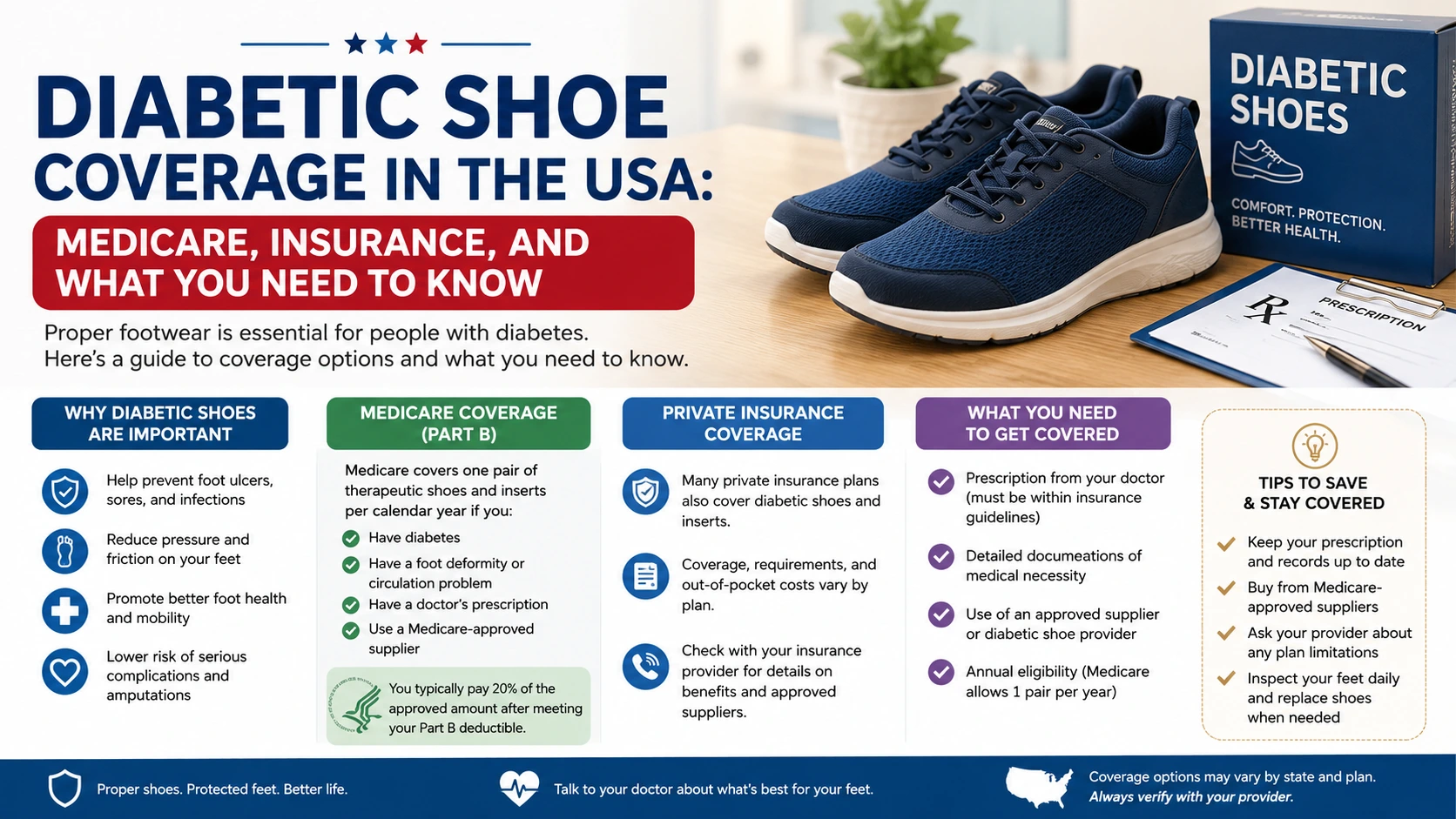
Medicare Part B covers therapeutic shoes and inserts for eligible people with diabetes as a preventive benefit to reduce foot complications like ulcers and amputations.
What’s Covered (Per Calendar Year)
- One pair of extra-depth shoes + 3 pairs of inserts, OR
- One pair of custom-molded shoes + 2 additional pairs of inserts (plus the initial pair)
- Fitting and modifications as needed
Coverage includes both shoes even if only one foot is affected. You are responsible for the Part B deductible (if not yet met) and typically 20% coinsurance of the Medicare-approved amount, assuming the supplier accepts assignment.
2026 Medicare Reimbursement Rates (approximate, varies by state and locality):
- Extra-depth shoes (A5500): Around $181 per pair
- Prefabricated inserts (A5512): Around $74 per pair
- Custom-molded inserts: Higher rates (around $110+)
Total potential value can exceed $400 depending on the options chosen.
Who Qualifies for Medicare Coverage?
You must meet all of these:
- Have diabetes mellitus (Type 1 or Type 2).
- Be under a comprehensive diabetes treatment plan by a qualifying physician.
- Have one or more of the following severe diabetes-related foot conditions (documented in your medical record):
- Peripheral neuropathy with evidence of callus formation
- History of previous foot ulceration
- History of pre-ulcerative calluses
- Foot deformity (e.g., bunions, hammertoes, Charcot foot)
- Poor circulation (peripheral vascular disease)
- Previous partial or complete foot amputation
A doctor (usually the one managing your diabetes) must certify medical necessity via a Statement of Certifying Physician. A podiatrist or other qualified provider must prescribe the shoes.
Important Requirements and Process
- Certifying Physician: Must have an in-person visit addressing your diabetes care within 6 months before delivery of the shoes.
- Supplier: Must be Medicare-enrolled. Shoes are typically provided by podiatrists, pedorthists, orthotists, or specialized DME suppliers.
- Timing: Benefit renews each calendar year. A new certification is needed after one year.
- Documentation: Thorough records are required to avoid claim denials. CMS emphasizes compliance in 2026.
Steps to Get Covered:
- Discuss with your doctor during a diabetes visit.
- Get the certification statement completed.
- Get a prescription from a qualified provider.
- Visit a Medicare-approved supplier for fitting (proper measurement and selection are key).
- Submit the claim — the supplier usually handles billing.
Medicare Advantage (Part C) Plans
Most Medicare Advantage plans provide at least the same coverage as Original Medicare for therapeutic shoes. Some may offer additional benefits (e.g., more pairs or lower copays). Check your plan’s Evidence of Coverage or call the plan directly.
Private Insurance and Other Coverage
- Many private health plans, including those from employers or ACA marketplace plans, cover diabetic shoes similarly to Medicare if you meet medical necessity criteria.
- Medicaid: Coverage varies by state — some states provide good benefits for diabetic footwear.
- Supplemental Insurance (Medigap): Can help cover the 20% coinsurance under Original Medicare.
- VA or TRICARE: Separate benefits may apply for veterans or military families.
Always confirm with your specific insurance provider, as policies differ.
What Diabetic Shoes Typically Include
- Extra-depth shoes: Extra room for inserts and swollen feet, seamless interiors, and supportive designs.
- Custom-molded shoes: Made from a mold of your foot for severe deformities.
- Inserts: Multi-density, pressure-relieving, often heat-moldable for better fit.
- Features like rocker bottoms, wide toe boxes, and breathable materials help prevent ulcers.
Tips for Success
- See a podiatrist regularly — they can help with certification, fitting, and ongoing foot care.
- Don’t wait for problems to worsen; preventive coverage is available even without active wounds.
- Keep good records of your diabetes management and foot exams.
- If denied, ask for a detailed explanation and appeal if appropriate.
- Combine with daily foot care (inspection, proper hygiene, moisturizing, etc.) for best protection.
- Shop only with approved suppliers to ensure coverage.
Limitations
- Medicare does not cover routine foot care (e.g., nail trimming, corn removal) unless medically necessary for other conditions.
- Off-the-shelf shoes without a prescription and certification are generally not covered.
- You cannot get replacement shoes mid-year unless medically justified and within the annual limit.
Bottom Line: For many people with diabetes in the USA, Medicare or private insurance can significantly reduce or eliminate the out-of-pocket cost of high-quality therapeutic shoes and inserts — often making them nearly free after any deductible or coinsurance. This benefit is one of the most valuable preventive tools available to protect your feet and mobility.
Talk to your doctor at your next visit about whether you qualify. Early action with proper footwear can prevent serious complications down the road.
Key Official Sources:
- Medicare.gov: Therapeutic Shoes & Inserts
- CMS Local Coverage Determination (LCD) for Therapeutic Shoes for Persons with Diabetes
- Your state’s Medicare Administrative Contractor (MAC) for specific details
Would you like help with a sample doctor discussion script, tips on choosing shoes, or information specific to your state/insurance plan?