Daily foot care is one of the most effective ways to prevent serious complications like ulcers, infections, and amputations. Diabetes raises risk due to neuropathy (reduced sensation), poor circulation, and slower healing. Consistent habits, combined with good blood sugar control, make a big difference.
Core Daily Foot Care Routine
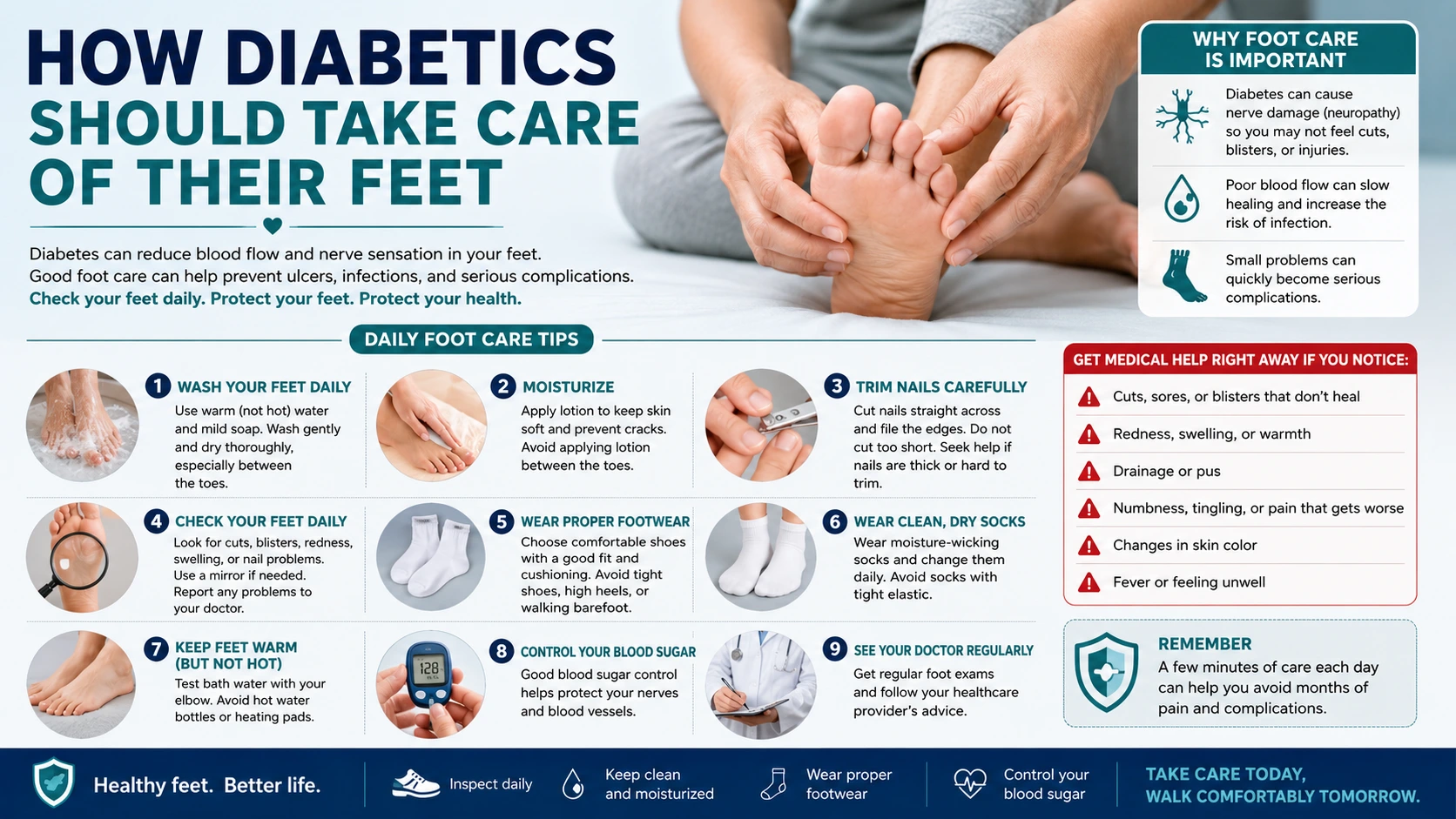
- Inspect your feet every day — Check tops, bottoms, sides, heels, and between toes for cuts, blisters, redness, swelling, calluses, corns, or color/temperature changes. Use a handheld mirror or ask for help if needed. Do this at the same time daily.
- Wash feet daily — Use lukewarm (not hot) water and mild soap. Test water temperature with your elbow. Pat dry thoroughly, especially between toes. Avoid soaking.
- Moisturize — Apply lotion or cream to the tops and bottoms of feet to prevent cracking, but skip between the toes to avoid fungal infections. Urea-based creams are often helpful.
- Nail care — Trim toenails straight across after bathing (when softer) and file edges smooth. If you have poor vision, neuropathy, or thick nails, see a podiatrist.
- Footwear — Never go barefoot (even indoors). Wear well-fitting shoes with a wide toe box, cushioning, and seamless interiors. Check inside shoes for objects daily. Use moisture-wicking, seamless socks.
- Professional care — Get a comprehensive foot exam at least annually (more often if high-risk). See a podiatrist regularly for nail care, callus removal, and risk assessment.
Additional essentials: Control blood sugar, blood pressure, and cholesterol. Quit smoking. Stay active with doctor-approved low-impact exercise. Manage weight. Treat any minor issues promptly and seek immediate care for red flags (non-healing wounds, infection signs, etc.).
The 5 Principles (Cornerstones) of Foot Ulcer Prevention
According to the International Working Group on the Diabetic Foot (IWGDF), these five key elements form the foundation of prevention:
- Identifying the at-risk foot — Through regular screening (neuropathy testing, vascular assessment, deformity check).
- Regularly inspecting and examining the at-risk foot — Daily self-inspection + professional exams.
- Educating the patient, family, and healthcare professionals — On self-care, footwear, and when to seek help.
- Ensuring routine wearing of appropriate footwear — Therapeutic shoes/inserts when indicated.
- Treating risk factors for ulceration — Such as calluses, deformities, poor glycemic control, and pre-ulcerative lesions.
These are best delivered through integrated, multidisciplinary care.
What Is the “Rule of 50” for Diabetic Foot?
The “Rule of 50” (or 50% rule) is a clinical guideline for managing existing diabetic foot ulcers:
- If an ulcer does not reduce in area by at least 50% after 4 weeks of optimal standard care (offloading, infection control, debridement, etc.), it is unlikely to heal within 12 weeks with standard care alone.
- At that point, reassess and consider advanced therapies or adjunctive treatments.
Another related “Rule of 50” notes poor prognosis statistics: roughly 50% of diabetic foot ulcers have poor circulation, 50% become infected, and many infected ones lead to amputation if not managed aggressively.
What Are the 4 (or 5) Stages of Diabetic Foot?
Common classifications include the Edmonds staging system (often described with 5 stages) for the natural history of the diabetic foot:
- Stage 1: Normal foot (low risk).
- Stage 2: High-risk foot (neuropathy, deformity, poor circulation, but no ulcer).
- Stage 3: Ulcerated foot.
- Stage 4: Infected foot.
- Stage 5: Necrotic foot (gangrene).
Wagner-Meggitt classification is also widely used and focuses on ulcer depth/severity (Grades 0–5).
Early intervention in Stages 1–2 prevents progression to ulcers.
Insurance Coverage for Diabetic Shoes
Medicare (Part B): Covers therapeutic (extra-depth) shoes and inserts for qualifying patients with diabetes and at least one severe foot condition (e.g., neuropathy with callus, history of ulcer, deformity, poor circulation).
- One pair of shoes + 3 pairs of inserts (or custom-molded shoes + 2 pairs) per calendar year.
- You pay 20% coinsurance after deductible (supplier must accept assignment).
- Requires certification by a physician and prescription from a qualified provider.
Medicaid: Varies significantly by state. Many states cover diabetic shoes and inserts with medical necessity documentation, but benefits, limits, and prior authorization differ. Check your state’s Medicaid program.
Private Insurance: Many plans follow similar rules to Medicare; check your policy or call your insurer.
Key Tip: Work with a Medicare-enrolled supplier (podiatrist, pedorthist, etc.) for proper fitting and billing.
🦶 How Diabetics Keep Their Feet Healthy
Consistent daily habits are the foundation of diabetic foot health. Because diabetes can cause neuropathy (nerve damage) that leads to loss of feeling, you might not feel a minor injury, which can then become a serious infection . The goal is to prevent problems before they start.
Here are the essential steps you should take:
Daily Foot Check (The 2-Minute Habit)
Inspect your feet every day for cuts, blisters, redness, swelling, or nail problems. Use a mirror to see the soles, or ask a family member to help . Early detection is critical because pain is not a reliable warning sign.
Proper Washing and Drying
Wash your feet daily in warm (not hot) water. Do not soak them. Dry thoroughly, especially between the toes, as moisture here can lead to infection .
Moisturize (But Avoid the Toes)
Apply lotion to the tops and bottoms of your feet to prevent dry, cracked skin. Never put lotion between your toes, as this can create a moist environment for fungus and bacteria to grow .
Never Go Barefoot
Always wear shoes or slippers, even indoors. Walking barefoot increases the risk of stepping on something sharp or stubbing a toe, which can lead to a wound that heals poorly .
Wear Proper Footwear
Choose shoes that fit well and have a roomy toe box. Wear seamless, moisture-wicking socks. Always check the inside of your shoes before putting them on to feel for pebbles or torn linings that could rub and cause a blister .
Professional Care
Trim toenails straight across to prevent ingrown nails. Do not remove corns or calluses yourself or use medicated pads, as they can burn the skin. Have a foot doctor (podiatrist) examine your feet at least once a year .
Manage Blood Sugar
Keeping your blood glucose levels in your target range is the most important thing you can do to prevent nerve damage from getting worse .
📊 The 4 Stages of Diabetic Foot (Ulcer Classification)
The “4 stages” most commonly refer to the Wagner Ulcer Classification System, which grades ulcers by their depth and severity . This system helps doctors determine the appropriate treatment.
Please note: Healthcare professionals also use other systems like the University of Texas classification (which adds infection and ischemia) and the PEDIS/IDSA system (which grades infection severity from 1 to 4) .
📝 How to Maintain Diabetic Foot (Quick Checklist)
Maintaining healthy feet is a daily commitment. Here is a simple checklist to incorporate into your routine :
- Inspect: Check your feet every day for cuts, blisters, redness, and swelling.
- Wash: Wash with warm water and dry completely, especially between toes.
- Lotion: Apply moisturizer to dry skin on the tops and bottoms of feet only.
- Nails: Trim toenails straight across; file sharp edges.
- Shoes: Check inside shoes for debris before wearing them.
- Socks: Wear clean, dry, seamless socks. Change them daily.
- Barefoot: Never walk barefoot, even at home.
- Circulation: Wiggle your toes and put your feet up when sitting for long periods.
- Smoking: If you smoke, ask your doctor for help to quit. Smoking reduces blood flow to the feet .
🌙 Should Diabetics Wear Socks at Night?
Yes, wearing socks at night can be beneficial for many people with diabetes, as long as they are the right kind of socks.
The Benefits:
- Warmth: Neuropathy can make feet feel cold. Socks provide gentle, non-restrictive warmth.
- Protection: They protect feet from rubbing against bed sheets, which can cause friction blisters for those with fragile skin.
- Comfort and Sensation: For those who experience burning, tingling, or “pins and needles” at night from nerve pain, specialized socks can provide relief .
The Risks (and How to Avoid Them):
- Restriction is the enemy: Socks that are too tight with a strong elastic band can restrict circulation, which is already a concern for many diabetics. Look for socks with non-binding, loose-fitting cuffs .
- Overheating: Socks that don’t breathe can cause feet to sweat, creating a moist environment ideal for fungal infections.
What Socks to Wear at Night:
If you choose to wear socks to bed, prioritize comfort and safety:
- Look for: Socks made of soft, breathable, moisture-wicking materials like cotton or bamboo blends.
- Look for: Seamless socks to prevent pressure points and irritation .
- Look for: Non-binding tops that will not leave a mark on your leg.
- Specialized options: For nighttime burning pain, “cooling socks” containing gel or phase-change materials can help soothe symptoms .
The Bottom Line: If your feet get cold or uncomfortable at night, wearing loose, seamless, non-binding socks is a safe and helpful practice. You should avoid using heating pads or hot water bottles, as neuropathy can prevent you from feeling if they are too hot, leading to burns .
A final reminder: This information is for educational purposes. Always consult your doctor or podiatrist for advice specific to your health condition, especially if you notice any changes in your feet.
Disclaimer: This is general educational information based on current guidelines (as of 2026). Always consult your doctor, podiatrist, or diabetes care team for personalized advice. Coverage and recommendations can change—verify with official sources like Medicare.gov, ADA, or CDC.