Many Americans struggle to pay for healthcare even after qualifying for Medicare. That’s where dual eligibility comes in. If a person qualifies for both Medicare and Medicaid at the same time, they may receive broader healthcare coverage and lower out-of-pocket costs.
But many people still ask:
🔘 Find My SNP Plan – One ClickD-SNP | C-SNP | I-SNP
Who is eligible for dual Medicare and Medicaid?
The answer depends mainly on:
- Age or disability status
- Income level
- Financial resources
- State Medicaid rules
This guide explains dual eligibility in simple language so you can understand whether you or a loved one may qualify.
What Does Dual Eligibility Mean?
A person is considered dual eligible when they qualify for both:
- Medicare (federal health insurance)
- Medicaid (state and federal assistance program for low-income individuals)
These individuals are often called:
- Dual eligible beneficiaries
- Medicare-Medicaid enrollees
- Full duals or partial duals
Dual eligibility can significantly reduce healthcare expenses.
What Is Medicare?
Centers for Medicare & Medicaid Services Medicare is primarily health insurance for:
- People age 65 and older
- Younger people with certain disabilities
- Individuals with End-Stage Renal Disease (ESRD)
- Some people with ALS
Medicare includes:
- Part A (hospital insurance)
- Part B (medical insurance)
- Part D (prescription drug coverage)
However, Medicare still leaves many costs uncovered, including:
- Deductibles
- Copayments
- Coinsurance
- Long-term care in many cases
That is why Medicaid becomes important for low-income individuals.
What Is Medicaid?
Medicaid is a government healthcare assistance program for people with:
- Low income
- Limited financial resources
- Disabilities
- Certain long-term care needs
Each U.S. state runs its own Medicaid program using federal guidelines. Because of this:
- Income limits vary by state
- Asset rules may differ
- Coverage options can change depending on location
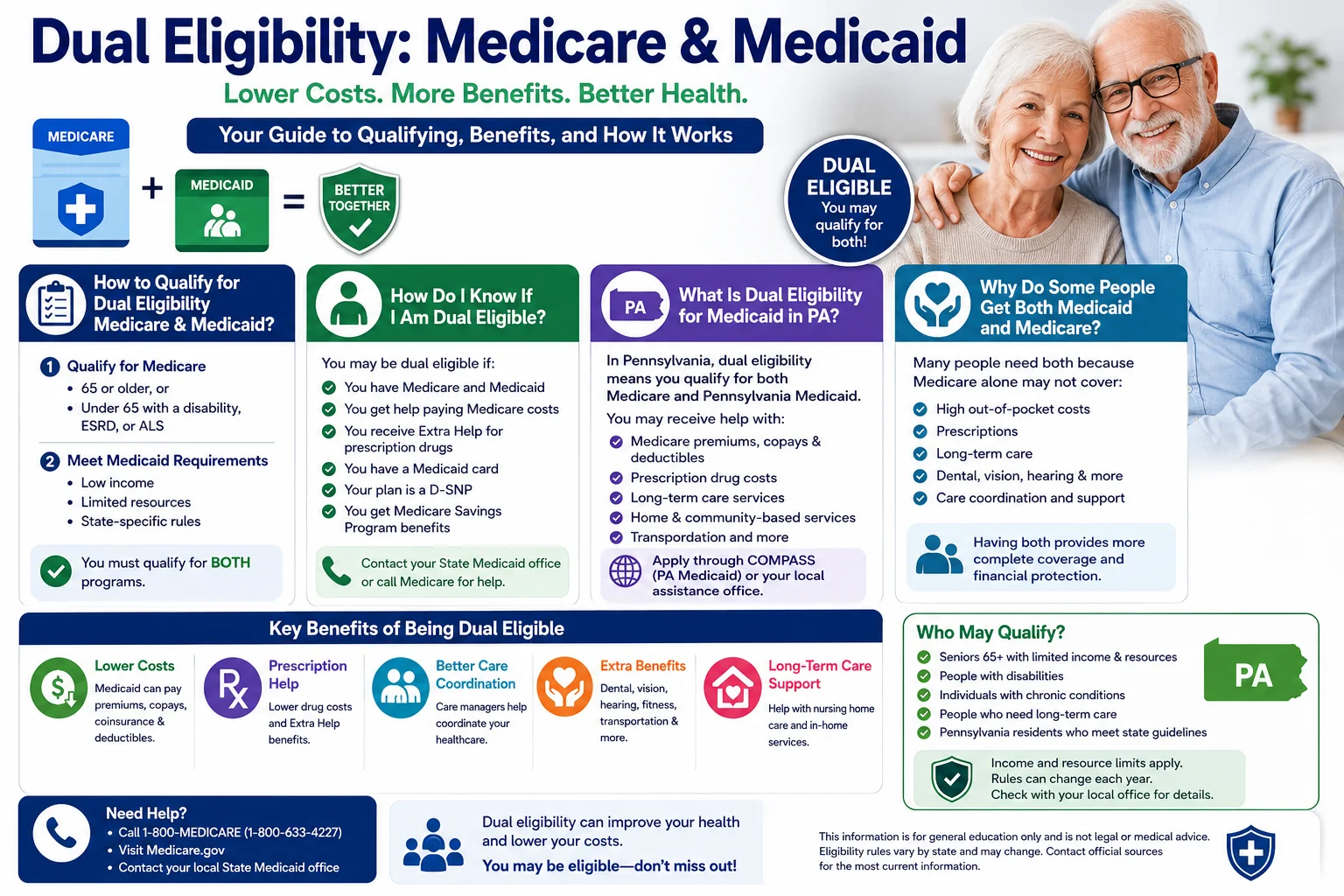
Who Is Eligible for Dual Medicare and Medicaid?
To become dual eligible, a person must first qualify for Medicare and also meet Medicaid financial requirements.
Basic Dual Eligibility Requirements
1. Qualify for Medicare
You may qualify for Medicare if you:
- Are 65 or older
- Have received Social Security Disability Insurance (SSDI) for 24 months
- Have certain qualifying medical conditions
2. Meet Medicaid Income Limits
Medicaid is income-based.
States evaluate:
- Monthly income
- Savings and assets
- Household size
- Medical expenses
People with limited income are more likely to qualify.
3. Meet Resource or Asset Limits
Some Medicaid programs also examine:
- Bank accounts
- Investments
- Additional property
- Certain retirement funds
However, many important assets may not count, including:
- Primary residence
- Personal belongings
- One vehicle in many situations
Types of Dual Eligibility
There are different levels of assistance under dual eligibility.
Full Dual Eligibility
People with full dual status receive:
- Medicare coverage
- Full Medicaid benefits
This may include:
- Long-term care
- Dental services
- Vision coverage
- Transportation assistance
- Home health services
Medicaid may also pay:
- Medicare premiums
- Deductibles
- Copays
Partial Dual Eligibility
Some people only qualify for help with Medicare costs through Medicare Savings Programs.
These programs may help pay:
- Part B premiums
- Coinsurance
- Deductibles
But they may not provide full Medicaid benefits.
Medicare Savings Programs (MSPs)
These programs help low-income Medicare beneficiaries.
Common MSP Categories
Qualified Medicare Beneficiary (QMB)
Helps cover:
- Medicare premiums
- Deductibles
- Copays
Specified Low-Income Medicare Beneficiary (SLMB)
Helps pay:
- Medicare Part B premiums
Qualified Individual (QI)
Also helps with:
- Part B premium assistance
Funding may be limited annually.
Qualified Disabled and Working Individuals (QDWI)
Supports certain disabled individuals who returned to work.
Income Limits for Dual Eligibility
Income limits change yearly and differ by state.
Generally, eligibility depends on:
- Federal Poverty Level (FPL)
- State Medicaid expansion rules
- Household income calculations
Some states are more generous than others.
Because limits frequently change, individuals should check:
- State Medicaid websites
- Medicare assistance offices
- Local benefits counselors
What Benefits Do Dual Eligible Individuals Receive?
Dual eligible beneficiaries may receive major financial protection.
Possible benefits include:
Lower Healthcare Costs
Medicaid may pay:
- Medicare premiums
- Deductibles
- Copays
- Coinsurance
Prescription Drug Assistance
Many dual eligible individuals automatically qualify for:
- Extra Help (Low-Income Subsidy)
- Reduced prescription costs
Long-Term Care Coverage
Medicaid may help cover:
- Nursing home care
- Assisted living support
- Home and community-based services
This is especially important because Medicare coverage for long-term care is limited.
Additional Health Services
Some Medicaid programs cover:
- Dental care
- Vision exams
- Hearing aids
- Transportation
- Personal care assistance
Can You Have Both Medicare and Medicaid at the Same Time?
Yes.
Millions of Americans receive both programs simultaneously.
Typically:
- Medicare pays first
- Medicaid helps cover remaining approved costs
This coordination can dramatically reduce out-of-pocket expenses.
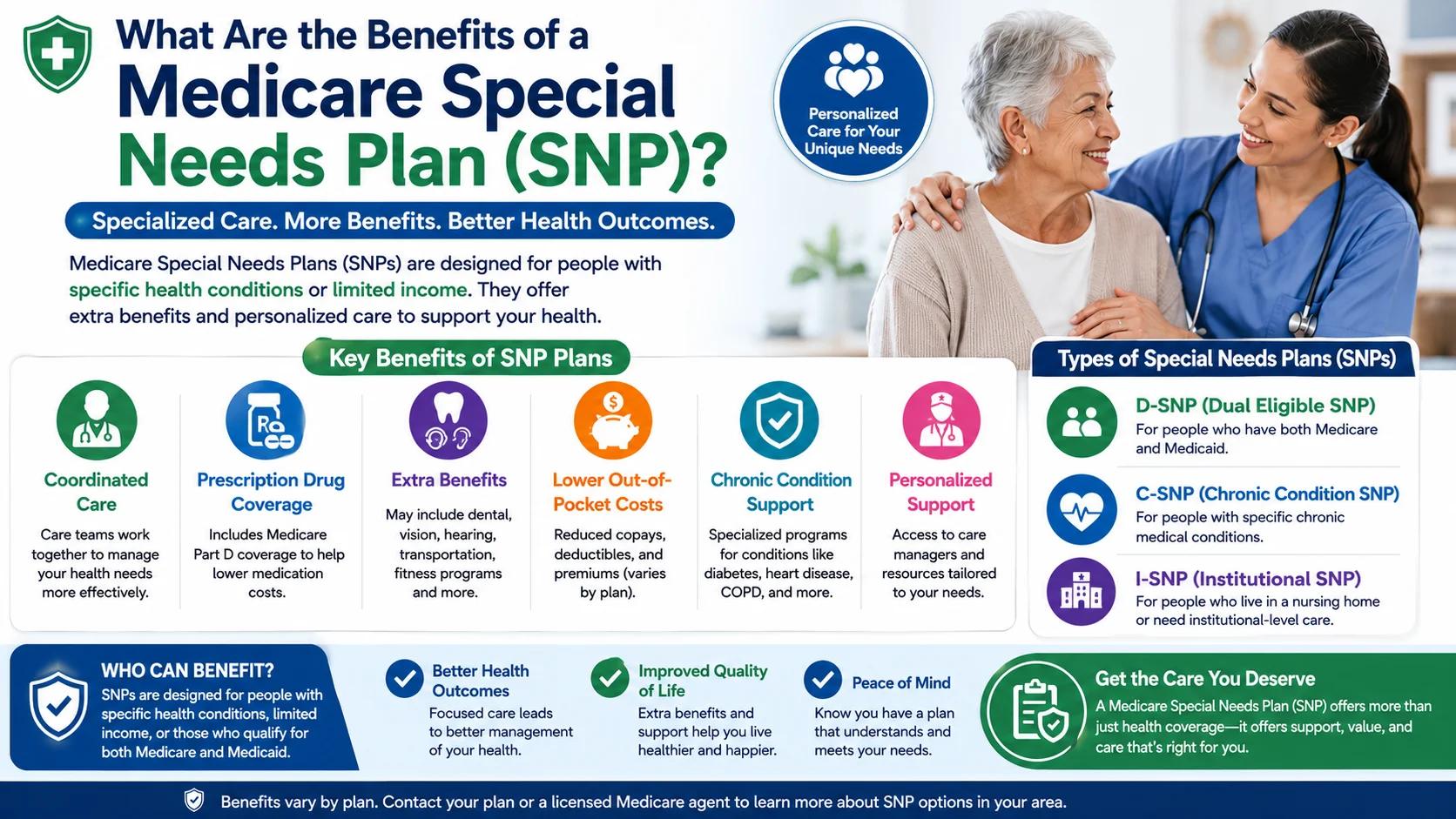
What Is a Dual Eligible Special Needs Plan (D-SNP)?
Some insurance companies offer special Medicare Advantage plans called D-SNPs.
These plans are designed specifically for dual eligible individuals.
They may provide:
- Coordinated care
- Extra benefits
- Simplified billing
- Additional support services
How to Apply for Dual Eligibility
Step 1: Apply for Medicare
Most people apply through:
- Social Security
- Medicare enrollment systems
Step 2: Apply for Medicaid
Applications are usually handled through:
- State Medicaid agencies
- Healthcare marketplaces
- Local assistance offices
Documentation may include:
- Income records
- Identification
- Bank statements
- Medical disability information
Common Reasons People Qualify
People often become dual eligible because of:
- Retirement with limited income
- Disability
- Chronic illness
- High medical expenses
- Long-term care needs
Common Misunderstandings About Dual Eligibility
“I Own a Home, So I Cannot Qualify”
Not always true. Primary homes are often excluded from resource calculations.
“Only Nursing Home Residents Qualify”
False. Many people living independently qualify.
“Medicare Automatically Covers Everything”
Unfortunately, Medicare alone can still leave large medical expenses.
Why Dual Eligibility Matters
Healthcare costs in the United States continue rising rapidly.
For seniors and disabled individuals living on fixed incomes, dual eligibility may provide:
- Financial relief
- Better healthcare access
- Medication support
- Long-term care assistance
- Greater stability and peace of mind
Many people who qualify never apply simply because they do not realize help is available.
Final Thoughts
Understanding who is eligible for dual Medicare and Medicaid can make a major difference for individuals facing rising medical costs.
In general, people may qualify if they:
- Are eligible for Medicare due to age or disability
- Have low income
- Meet state Medicaid requirements
Because rules vary by state and personal circumstances, it is important to check local eligibility guidelines and seek assistance when needed.
For many Americans, dual eligibility can mean better healthcare coverage, lower expenses, and improved quality of life.
Frequently Asked Questions
Can you be denied Medicaid if you already have Medicare?
Yes. Medicare eligibility alone does not automatically qualify someone for Medicaid. Financial requirements still apply.
Does Medicaid pay Medicare premiums?
In many cases, yes. Certain Medicaid and Medicare Savings Programs help pay premiums and other costs.
Is dual eligibility available in every state?
Yes, but benefits and income limits differ by state.
Can younger disabled adults qualify?
Yes. Many people under 65 qualify through disability-based Medicare and Medicaid programs.
Helpful Official Resources
Disclaimer:
This article is for educational purposes only and should not be considered legal, financial, or medical advice. Medicaid and Medicare rules vary by state and may change over time. Always consult official government resources or licensed benefits counselors for personalized guidance.