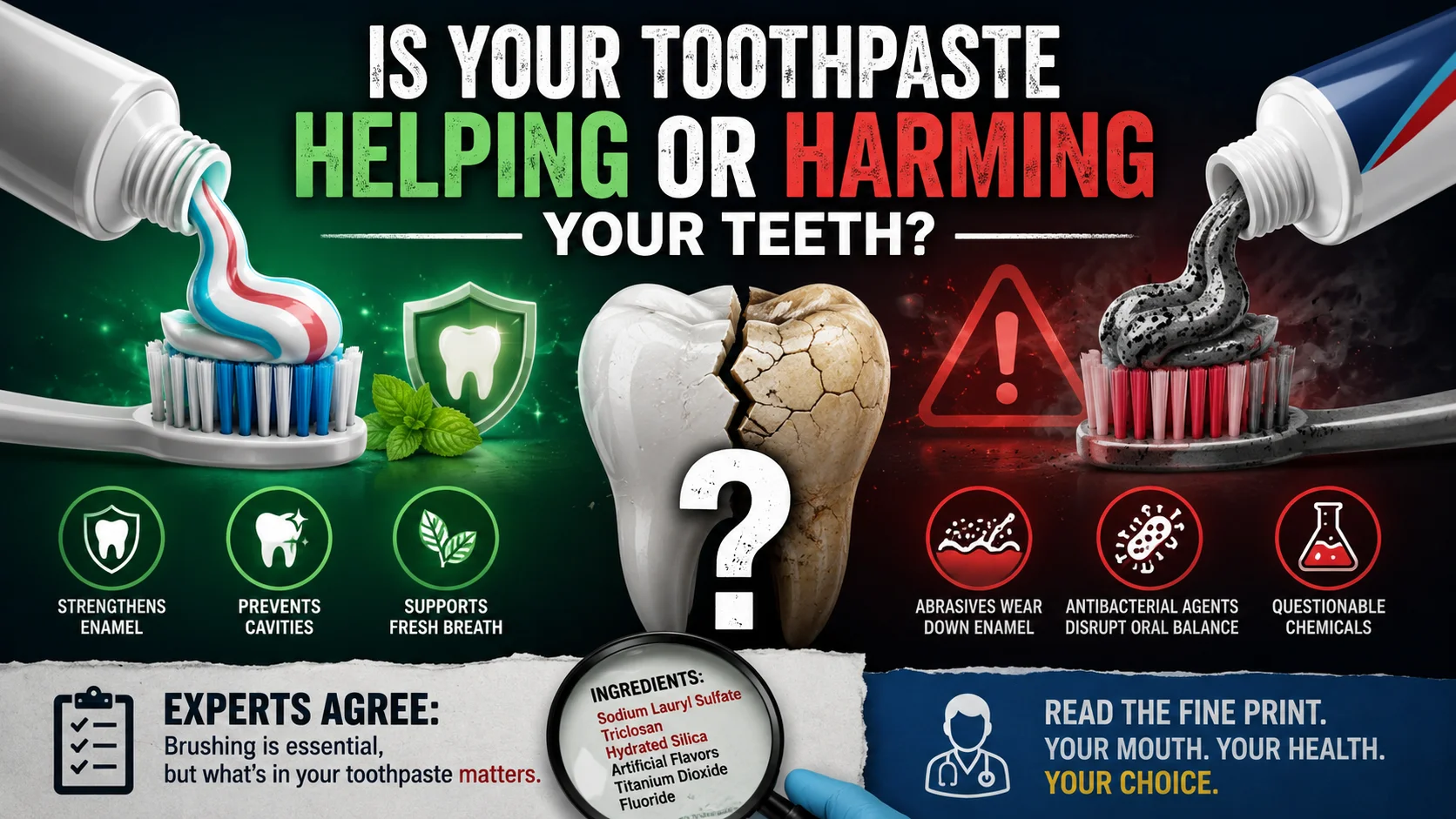
For decades, the daily ritual of squeezing toothpaste onto a brush has been presented as the unshakable foundation of oral hygiene.Is Your Toothpaste Helping or Harming Your Teeth? We trust that this paste is not just cleaning our teeth but actively protecting them. However, a growing body of evidence and vocal criticism from dental professionals suggest that not all toothpaste is created equal. In fact, some of the ingredients designed to “freshen” or “clean” might be doing more harm than good.
So, the critical question every consumer must ask is: Is your toothpaste helping or harming your teeth?
To find the answer, we spoke with senior clinicians and general dentists who are re-evaluating the standard ingredients list. A Senior Clinician and a Dentist writes , While the consensus remains that brushing is non-negotiable, the experts are now urging patients to look beyond the marketing claims and read the fine print. From abrasive powders that wear down enamel to antibacterial agents that destroy the mouth’s natural ecosystem, your toothpaste could be a double-edged sword.
Here is what you need to know to protect your smile.
The Great Fluoride Debate: Protection vs. Caution
For over 75 years, fluoride has been the gold standard in cavity prevention. It is a naturally occurring mineral that rebuilds (remineralizes) weakened tooth enamel. When you eat sugar, bacteria in the mouth produce acid that demineralizes the teeth. Fluoride helps reverse this process by forming a stronger, acid-resistant compound called fluorapatite .
However, the rise of “fluoride-free” marketing has caused confusion. Is fluoride a necessary shield or a chemical risk?
According to dental experts, the answer depends entirely on dosage and age. Dr. Mark Burhenne, a family dentist with over 40 years of experience, cautions that while fluoride is effective, the modern “one-size-fits-all” approach is flawed. He notes that the overuse of fluoride, particularly in young children who swallow toothpaste, can lead to dental fluorosis (white streaking or spotting on the teeth) .
Conversely, a senior clinician from the Caruth School of Dental Hygiene points out that skipping fluoride entirely leaves teeth vulnerable. “There is one gold standard for products… the American Dental Association Seal of Acceptance,” says Cherri Kading, a dental hygiene clinic coordinator . Most ADA-approved pastes contain fluoride.
The Clinician’s Advice: If you are an adult with a history of cavities, fluoride is highly beneficial. However, if you are worried about toxicity or have young children (under 6) who cannot spit effectively, consider using a fluoride-free paste specifically for that child, or use a rice-grain-sized smear of fluoride paste to minimize ingestion .
The Hidden Danger: When Toothpaste Wears Away Teeth
Perhaps the most overlooked danger lurking in your bathroom cabinet is abrasiveness. Toothpastes are pastes because they contain grit. This grit scrubs off plaque and stains. However, if the grit is too large or hard, it acts like sandpaper, wearing away the tooth enamel and exposing the sensitive dentin underneath.
This is measured by the RDA (Relative Dentin Abrasivity) value. The higher the RDA, the more abrasive the paste.
Experts warn that “whitening” toothpastes are often the worst offenders. These products frequently have RDA values over 100, and in some jurisdictions, the legal limit is as high as 250 . A senior clinician advises that while a value of 200 might make your teeth feel “squeaky clean” instantly, it is actually scratching the microscopic structure of your enamel.
“With age, adults are more prone to gingival recession which exposes dentin… Low-abrasive formulation (Low RDA) protects exposed root surfaces.”
The Dentist’s Advice: Look for toothpastes with a low RDA. For daily use, an RDA between 30 and 80 is ideal for adults . If you have sensitive teeth, exposed roots, or receding gums, switch to an “extra gentle” or “sensitive” formula and check the label for low-abrasion claims. Never use high-abrasion whitening pastes for more than a few days at a time.
“Natural” Doesn’t Mean Safe: The Microbiome Problem
There is a massive shift toward “natural” products. Walking down the oral care aisle, you will see tubes boasting ingredients like charcoal, tea tree oil, cinnamon, and clove. While these sound idyllic, some dentists are sounding the alarm louder than ever.
Dr. Burhenne recently issued a stark warning against “natural” toothpastes that rely on essential oils. “They don’t know the difference between the bacteria destroying your teeth and the bacteria protecting them,” he warned. “You’re nuking the whole ecosystem in your mouth twice a day” .
Your mouth is a living ecosystem. It requires “good” bacteria to keep pathogenic (cavity-causing) bacteria in check. Harsh antimicrobials—whether synthetic like triclosan (now banned in some countries) or natural like grapefruit seed extract and goldenseal—kill all bacteria indiscriminately .
Furthermore, senior clinicians warn that “natural” ingredients can have serious side effects. Lisa Mallonee, a registered dietitian and associate professor, notes that ingredients like goldenseal are discouraged for pregnant patients, and large amounts of sage oil can cause kidney issues .
The Senior Clinician’s Advice: “Going natural isn’t necessarily better if you haven’t done your research,” says Cherri Kading. “Beware of ingredients such as aloe and goldenseal oil that can act as a double-edged sword” . Do not assume a product is safe just because it is plant-based.
In light of the expert warnings about high abrasivity, chemical detergents, and the destruction of the oral microbiome, the question remains: Is your toothpaste helping or harming your teeth? The answer for many consumers now lies in a new generation of smart formulations.
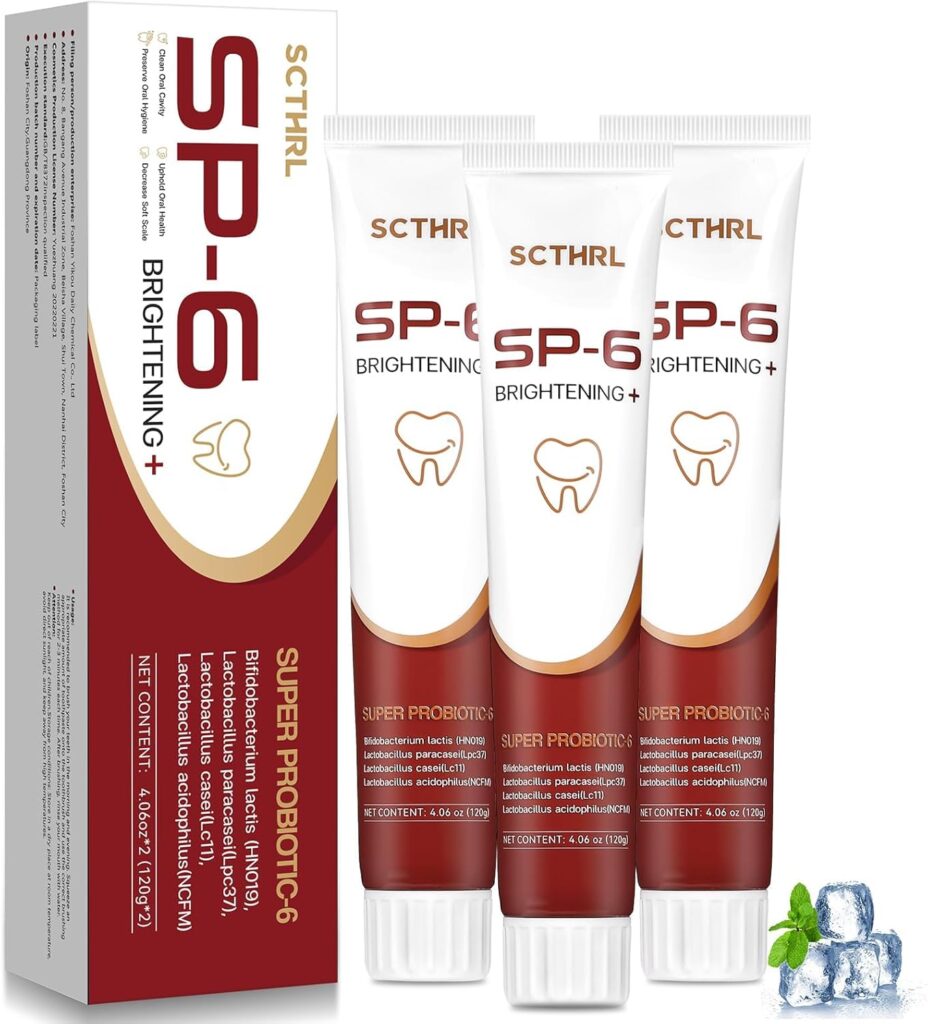
Our flagship product, the SP-6 Probiotic Whitening Fluoride Free Toothpaste, features an upgraded formula with natural ingredients like biotin and probiotics for ultra-brightening, gum repair, and stain removal, directly addressing the clinician’s call for ecosystem-friendly oral care. Where traditional pastes use harsh grit to strip away enamel, SP-6 leverages probiotics to balance good bacteria, while biotin soothes dry tissue and repairs gum inflammation.
It is dentist-recommended and clinically proven to deliver 3-shades brighter smiles in just 14 days, all without a single drop of fluoride or sodium lauryl sulfate. Perfect for sensitive teeth that react to aggressive whitening agents, this toothpaste is also an ideal gift for smokers looking to lift deep-set tar stains without causing further recession or irritation. With SP-6, you are not just cleaning your teeth; you are repairing the living ecosystem of your mouth.
Disclosure: As an Amazon Associate, I earn a commission from qualifying purchases made through the links in this post. This content is for informational purposes only and is not a substitute for professional medical or dental advice. Always consult with a licensed dentist or qualified healthcare provider regarding any questions you have about your oral health or specific medical conditions. The statements regarding the SP-6 Probiotic Whitening Fluoride Free Toothpaste have not been evaluated by the FDA. Results, including “3-shades brighter in 14 days,” are based on clinical studies and individual results may vary.
Ingredients to Swear By (And Ingredients to Swear Off)
So, if you can’t trust the marketing, what specific ingredients should you look for on the back of the tube?
According to clinical guidance and product formulations, here is a cheat sheet for your next shopping trip:
The “Helpful” List (The New Gold Standard)
- Nano-Hydroxyapatite (n-Ha): This is the mineral that actually makes up your enamel. Unlike fluoride, which primarily hardens the surface, n-Ha can penetrate deep into the lesion to repair teeth from the inside out. It is non-toxic and biomimetic, meaning it mimics nature .
- Arginine: An amino acid that helps balance the pH in your mouth. It raises the acidity level, making it harder for cavities to form, and works synergistically with fluoride .
- Stannous Fluoride: A specific type of fluoride that is excellent for treating sensitivity and gingivitis, though it can sometimes stain teeth (which your dentist can polish off) .
- Low RDA Values (0-80): Ensures cleaning without destructive scratching .
The “Harmful” List (Proceed with Caution)
- SLS (Sodium Lauryl Sulfate): The foaming agent. It has no cleaning benefit; it just makes you feel like the product is working. It can strip the oral mucosa, cause canker sores, and alter the microbial environment .
- Charcoal: Highly abrasive. It gets into the tiny cracks of your enamel and wears them down over time. Most dentists advise against daily charcoal use.
- Titanium Dioxide: Used for whitening, it has raised genotoxicity concerns in recent studies and offers no therapeutic benefit .
- High RDA (>100): Avoid for daily use; reserve for occasional stain removal only .
One Size Does Not Fit All
The most critical piece of advice from senior clinicians is that your toothpaste must match your age and medical condition. “One toothpaste doesn’t fit all,” states clinical guidance from dental professionals .
- For Children: Baby teeth have thinner enamel. Look for low RDA (35-50) and lower fluoride (500 ppm) or hydroxyapatite, as children under six often swallow paste rather than spit it out .
- For Dry Mouth (Xerostomia): Many medications cause dry mouth, which accelerates decay. Avoid SLS (which dries further) and look for moisturizing agents or biomineral formulas that don’t require heavy saliva to activate .
- For Seniors: With receding gums and root exposure, seniors need low-abrasion pastes with high fluoride or hydroxyapatite to prevent root caries .
The Verdict: Helping or Harming?
Ultimately, toothpaste is a medical device—it is a topical gel designed to deliver therapeutic agents to the teeth. It is helping if it contains remineralizing agents (Fluoride or n-Ha) and has a low abrasivity (RDA <80).
It is harming if it relies on detergents (SLS) for foam, chemicals (Titanium Dioxide) for white color, or essential oils for a “natural” kill-all approach to bacteria .
Final advice from the Senior Clinician: “Read the ingredients… consulting with the dentist may be beneficial if he or she has a working knowledge about the all-natural products.”
Final advice from the Dentist: “You want a toothpaste that supports the environment, not one that treats your mouth like a biohazard zone.”
Before you buy your next tube, turn it over. If you can’t pronounce the ingredients, or if the ingredient list is focused on “whitening” grit and heavy foam, put it back. Your teeth don’t need to be bleached or sanitized into a sterile void—they need to be remineralized and protected.
FAQS:
Does toothpaste really help your teeth?
Yes, toothpaste absolutely helps your teeth—but not all toothpaste is equally effective, and some can even cause harm if formulated poorly.
Toothpaste serves as a delivery vehicle for therapeutic ingredients that clean, protect, and remineralize your teeth. When used correctly, it provides several proven benefits:
The “basics of dental hygiene are probably still the things that matter the most,” says Diana Nguyen, DDS, chief of clinical general dentistry at UCSF. “That means brushing your teeth twice a day, using toothpaste that contains fluoride, flossing regularly, and getting regular professional dental cleanings” .
However, toothpaste can harm your teeth if it is too abrasive. Every toothpaste has a Relative Dentin Abrasivity (RDA) value. A safe RDA score is generally considered to be 250 or lower, according to the American Dental Association . Products with excessively high abrasivity can wear down enamel over time, especially “whitening” pastes that rely on harsh grit rather than chemical stain lifters like hydrogen peroxide or carbamide peroxide .
✅ Bottom line: Choose a toothpaste with fluoride (or nano-hydroxyapatite) and a safe RDA value below 250. Avoid charcoal-based pastes and overly abrasive “natural” whiteners.
Is niacinamide safe to use in toothpaste?
Yes, niacinamide is considered safe for use in toothpaste, but there is currently no robust scientific evidence that it whitens teeth or provides meaningful oral health benefits .
Niacinamide (also called nicotinamide) is a form of vitamin B3 widely used in skincare for its anti-inflammatory and skin-brightening properties. However, the mechanism that makes it work on skin does not translate to teeth.
Why the hype doesn’t hold up
Teeth whitening trends on TikTok have promoted niacinamide toothpaste with claims of “instant results” . But according to dental experts, there is a fundamental flaw in this logic:
“There’s no melanin in tooth enamel,” says Dr. Nguyen. Niacinamide lightens skin by acting on melanocytes—the cells that produce melanin pigment. Teeth turn yellow due to completely different factors: staining from coffee, tea, tobacco, and plaque buildup. “It’s quite unlikely that niacinamide does much to whiten teeth” .
What the limited research shows
- One 2022 lab study (not involving human participants) suggested niacinamide may slow the growth of certain cavity-causing bacteria
- Anti-inflammatory properties in theory could help reduce gum inflammation, but “we just don’t know how much of a difference this ingredient can actually make since there are extremely limited studies investigating how well niacinamide gets absorbed into the gums—especially when it’s delivered through toothpaste”
Expert verdict
“I would not say that it’s a good idea to rely on it for whitening or cavity prevention,” says Dr. Nguyen. “I think we have to just wait for more research,” adds Anukriti Gupta, DMD .
Safety conclusion: Niacinamide toothpaste is unlikely to harm you, but it is also unlikely to deliver the whitening results claimed by manufacturers. Stick to proven whitening agents like hydrogen peroxide or carbamide peroxide for actual results .
What is the best toothpaste for cigar smokers?
The best toothpaste for cigar smokers is one that specifically targets heavy tobacco stains, neutralizes strong odors, and contains fluoride or hydroxyapatite for enamel protection.
Smokers face three unique oral health challenges:
- Deep-set yellow/brown stains from tar and nicotine
- Persistent bad breath (halitosis) from tobacco residue
- Increased risk of gum disease due to reduced blood flow and bacterial buildup
Key ingredients to look for
Product examples marketed for smokers
- Ecodenta Whitening Toothpaste with Bergamot & Lemon – “Especially developed for coffee, tea, red-wine-drinkers & smokers.” Contains hydrated silica for stain removal and bergamot oil to neutralize smoke smell. Fluoride level: 1,447 ppm
- Marvis Smokers Whitening Mint – Advanced polishing formula for tobacco, coffee, and wine stains. Contains fluoride for cavity protection
Professional advice for smokers
Dr. Matthew Crystal, DMD, notes that whitening toothpastes primarily work through mild abrasives that physically scrub surface stains. For deeper stains, you may need whitening strips or gels containing hydrogen peroxide .
⚠️ Important: Before using any whitening product, consult your dentist to ensure your teeth and gums are healthy enough. Smoking increases your risk of gum disease and oral cancer, so regular dental checkups are essential.
Recommended routine for smokers
- Morning: Use a stannous fluoride toothpaste for gum health and bacteria control
- Evening: Use a whitening toothpaste with hydrogen peroxide or carbamide peroxide to lift stains
- After smoking: Rinse with water or use a breath-freshening mouthwash
- Twice daily: Brush for a full 3 minutes each time
What is the 3-3-3 rule for brushing teeth?
The 3-3-3 rule (also called the 3-3-3 brushing method or “333刷牙法” in Korean dental practice) is a guideline for effective oral hygiene that recommends:
Why 3 minutes matters
According to dental experts cited in Chinese health publications, there are approximately 80 tooth surfaces that need cleaning. A standard toothbrush can only reach 2-3 teeth at a time, so rushing through brushing in under a minute means missing significant plaque buildup .
The 3-minute duration allows you to brush systematically:
- Outer surfaces of all teeth
- Inner surfaces of all teeth
- Chewing (occlusal) surfaces
- Along the gumline
Why brushing within 3 minutes after eating matters
When you eat, bacteria in your mouth begin fermenting food particles and producing acid almost immediately. Brushing within 3 minutes prevents this acid from starting the demineralization process that leads to cavities .
Origin of the 3-3-3 rule
The method has been actively promoted in Korean dentistry for decades and has been widely adopted in other Asian countries. Chinese health authorities have published the “3-3-3刷牙法” (333 brushing method) as a public health recommendation .
Clinical rationale
Dr. Chen Shizhang, Director of the Stomatology Department at Beijing You’an Hospital, explains that “brushing的基本原则 is ‘面面俱到’ (covering every surface). With 80+ surfaces to clean and a brush that only reaches 2-3 teeth at a time, 3 minutes is the minimum needed to do the job properly” .
Practical tips for following the 3-3-3 rule
- Morning: Listen to news or a podcast while brushing
- Evening: Listen to music to make the 3 minutes enjoyable
- Use a timer or an electric toothbrush with a built-in timer
- If you cannot brush after lunch (e.g., at work), rinse thoroughly with water or use a fluoride mouthwash
⚠️ Note: While 3 times per day is ideal, the absolute minimum recommended by most dental associations worldwide is twice daily (morning and before bed) , with emphasis on the nighttime brushing being most critical since saliva flow decreases during sleep .
Summary Table
| Question | Key Takeaway |
|---|---|
| Does toothpaste help? | Yes—when it contains fluoride or hydroxyapatite and has a safe RDA below 250. |
| Is niacinamide safe? | Safe, but unproven for whitening. No evidence it works on teeth like it does on skin. |
| Best for smokers? | Look for hydrogen peroxide (deep stain removal) + essential oils (odor neutralization) + fluoride. |
| What is 3-3-3 rule? | Brush 3x daily, within 3 minutes after eating, for 3 minutes each time. |
Disclosure: As an Amazon Associate, I earn a commission from qualifying purchases made through the links in this post. This content is for informational purposes only and is not a substitute for professional medical or dental advice. Always consult with a licensed dentist or qualified healthcare provider regarding any questions you have about your oral health or specific medical conditions. The statements regarding the SP-6 Probiotic Whitening Fluoride Free Toothpaste have not been evaluated by the FDA. Results, including “3-shades brighter in 14 days,” are based on clinical studies and individual results may vary.