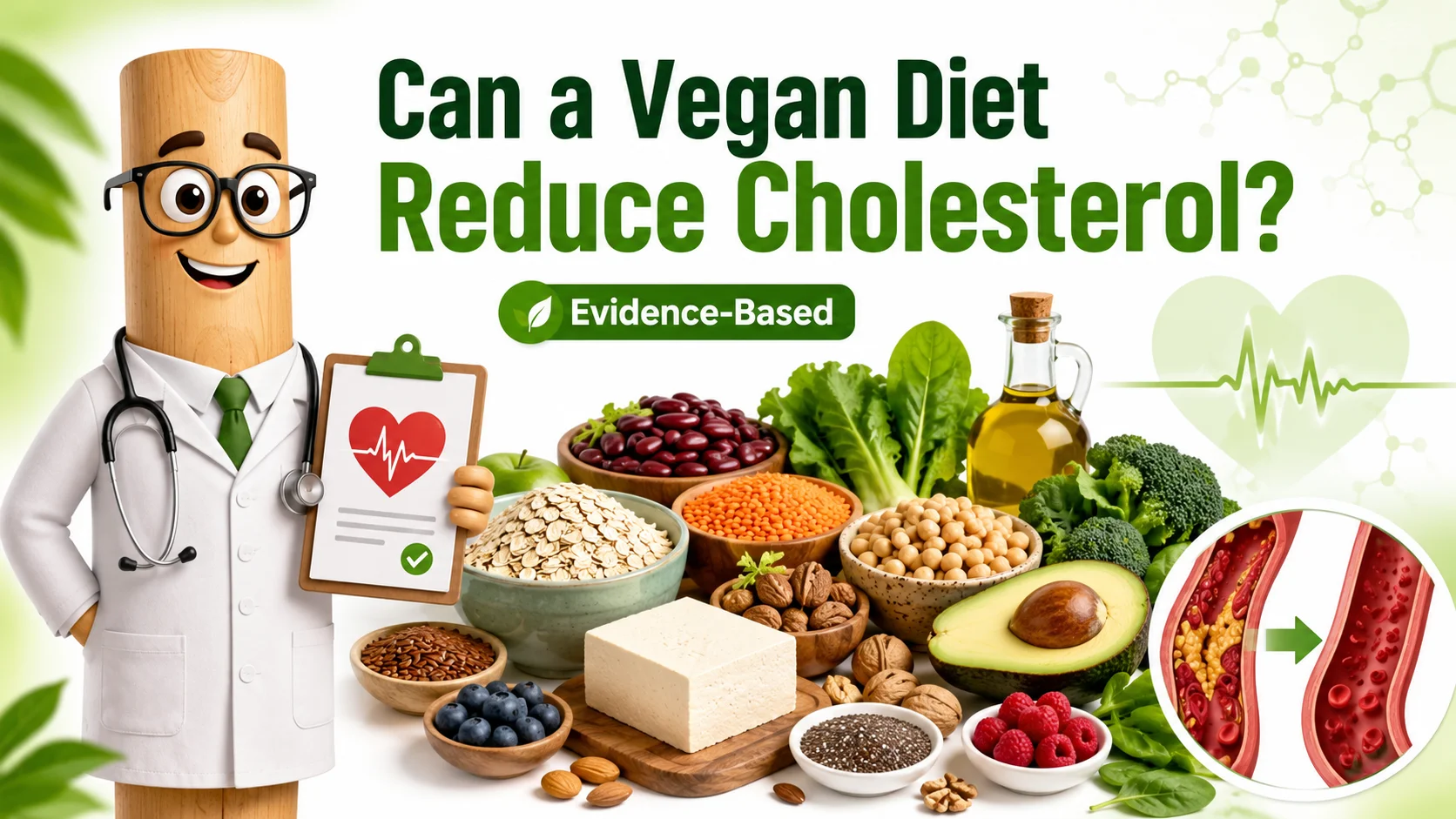
The relationship between diet and cholesterol levels has long been a central concern in cardiovascular health. Among the various dietary approaches proposed for cholesterol management, vegan diets have gained particular attention. But does the scientific evidence actually support the claim that a vegan diet can reduce cholesterol? The short answer is yes—and the evidence is substantial.
What the Science Says
A growing body of rigorous research consistently demonstrates that vegan diets are effective at lowering cholesterol levels. Perhaps the most compelling evidence comes from a 2023 meta-analysis published in the European Heart Journal, which examined 30 randomized controlled trials. The researchers found that compared to omnivorous diets, plant-based diets reduced total cholesterol by an average of 0.34 mmol/L and low-density lipoprotein (LDL) cholesterol—commonly known as “bad” cholesterol—by 0.30 mmol/L. These effects were consistent across different ages, continents, study durations, and health statuses.
Another systematic review and meta-analysis published in 2024 reinforced these findings, showing that vegetarian diets significantly reduced total cholesterol and LDL cholesterol compared to omnivorous diets in both observational studies and randomized controlled trials.
A 2025 systematic review evaluating 11 distinct randomized controlled trials found that vegan diets reduced LDL cholesterol by 0.44 mmol/L and total cholesterol by 0.42 mmol/L, with the most pronounced effects observed in individuals with metabolic syndrome and type 2 diabetes.
Perhaps one of the most striking studies in this area is the Stanford Twin Nutrition Study (TwiNS), which enrolled 22 identical twin pairs—a design that effectively controls for genetic differences. Over eight weeks, participants following a healthy vegan diet saw their LDL cholesterol drop by an average of 15.2 milligrams, while their omnivore counterparts experienced only a 2.4 milligram reduction.
Even compared to other heart-healthy diets, vegan diets appear to hold an edge. The OMNIVEG study, which compared a traditional Mediterranean diet to a vegan Mediterranean diet, found that shifting to the vegan version reduced total cholesterol by 22.6 mg/dl and LDL cholesterol by 12.8 mg/dl. Similarly, the FIBROVEG study demonstrated that a vegan Mediterranean diet produced greater reductions in LDL cholesterol than a traditional Mediterranean diet, with an estimated mean difference of 21.2 mg/dL.
How Does a Vegan Diet Lower Cholesterol?
The cholesterol-lowering effects of a vegan diet operate through multiple interconnected mechanisms.
- Elimination of dietary cholesterol. Perhaps the most straightforward mechanism is that plant-based foods simply do not contain cholesterol, which is only found in animal-based products. By eliminating meat, dairy, and eggs, a vegan diet removes the primary dietary sources of cholesterol.
- Reduction in saturated fat. Vegan diets tend to contain less saturated fat—the type of fat that raises LDL cholesterol—and more unsaturated fats. Avoiding foods high in saturated fat, such as red meat and cheese, is a key factor in lowering cholesterol.
- Increased soluble fiber intake. Fiber acts almost like a “vacuum cleaner” for arteries, helping to sweep away LDL cholesterol. Soluble fiber, found abundantly in oats, barley, legumes, fruits, and vegetables, binds to cholesterol in the digestive tract and promotes its excretion before it can be absorbed into the bloodstream. Some research suggests that consuming about 10 to 25 grams of soluble fiber daily may help lower LDL cholesterol.
- Plant sterols and phytochemicals. Plant-based foods contain naturally occurring compounds called phytosterols that compete with cholesterol for absorption in the intestine, thereby reducing serum cholesterol levels. Phytochemicals and whole plant foods have been shown to reduce LDL cholesterol through multiple molecular pathways, including inhibition of intestinal cholesterol absorption and acceleration of cholesterol excretion.
- Weight management. Vegan diets—particularly those focused on whole, minimally processed foods—tend to be lower in calories and higher in fiber, which promotes satiety and can support healthy weight loss. Since excess body weight is a risk factor for elevated cholesterol, this indirect effect further contributes to improved lipid profiles.
Important Caveats and Considerations
While the evidence for cholesterol reduction is strong, several important caveats deserve attention.
- Not all vegan diets are created equal. A vegan diet centered on whole, minimally processed foods—vegetables, fruits, whole grains, legumes, nuts, and seeds—is associated with significant health benefits. However, a vegan diet heavy in ultra-processed foods, such as packaged meat alternatives, vegan sweets, and convenience meals rich in saturated fats like coconut or palm oil, may not deliver the same cholesterol-lowering effects.
- The “good” cholesterol question. Some studies report modestly reduced high-density lipoprotein (HDL) cholesterol—often called “good” cholesterol—in populations following plant-based diets. However, this is generally considered less concerning when LDL cholesterol and total cholesterol are also reduced, and the overall LDL-to-HDL ratio often improves. The meta-analysis mentioned earlier found that vegetarian diets did reduce HDL cholesterol slightly, but the clinical significance of this reduction is debated.
- Triglycerides show mixed results. Multiple studies have found no consistent effect of vegan diets on triglyceride levels. For individuals with elevated triglycerides, additional dietary modifications may be necessary.
- Individual variability. Genetics play a significant role in cholesterol metabolism. Some people may still experience elevated cholesterol levels despite following a vegan diet. Factors such as genetics, family history, stress, physical inactivity, and certain medical conditions can all influence cholesterol levels independently of diet.
- Nutritional considerations. Eliminating all animal products increases the risk of certain nutritional deficiencies. Micronutrients of special concern for vegans include vitamin B12, vitamin D, calcium, and long-chain omega-3 fatty acids (EPA and DHA). Careful planning and, in some cases, supplementation are essential for maintaining overall health on a vegan diet.
Practical Recommendations
For those considering a vegan diet for cholesterol management, several evidence-based strategies can maximize the benefits:
- Emphasize whole foods. Focus on vegetables, fruits, whole grains, legumes, nuts, and seeds rather than processed vegan alternatives.
- Incorporate cholesterol-lowering foods. Oats and barley contain beta-glucan, a soluble fiber linked to lower LDL cholesterol. The “Portfolio Diet”—a plant-based dietary pattern designed specifically to lower cholesterol—includes viscous fiber from oats and barley, plant protein from soy and legumes, plant sterols from fortified foods, nuts, and plant sources of monounsaturated fats. This approach has been shown to lower cholesterol by as much as 30%.
- Monitor nutrient intake. Pay particular attention to vitamin B12, vitamin D, calcium, iodine, zinc, and omega-3 fatty acids. Supplementation may be necessary.
- Combine with other healthy lifestyle factors. Regular physical activity, stress management, and adequate sleep all contribute to healthy cholesterol levels and overall cardiovascular health.
The Bottom Line
The scientific evidence is clear and consistent: a well-planned vegan diet can significantly reduce total cholesterol and LDL cholesterol. The magnitude of reduction is clinically meaningful—comparable in some cases to first-generation statin medications—and the benefits extend beyond cholesterol to include improvements in body weight, blood pressure, insulin sensitivity, and inflammation.
However, a vegan diet is not a magic bullet. Its effectiveness depends on the quality of food choices, and individual results may vary based on genetics and other lifestyle factors. For those who adopt a whole-food, plant-based approach, the potential for cholesterol reduction—and broader cardiovascular protection—is substantial and well-supported by rigorous scientific research.