Introduction
Your gut microbiome is a living ecosystem of trillions of microbes that influence digestion, immunity, mood, and even weight. The food you eat every day is the single biggest lever you can pull to shape it.
But knowing how to improve your microbiome with diet isn’t just about eating yogurt or taking a probiotic capsule. It’s about feeding the right bacteria, starving the wrong ones, and doing it consistently.
This guide covers the best foods, the role of probiotics, what to avoid, and the practical changes with the strongest scientific backing. For a deeper look at the underlying science, see this breakdown on can changing your diet improve your microbiome.
How Diet Shapes Your Microbiome
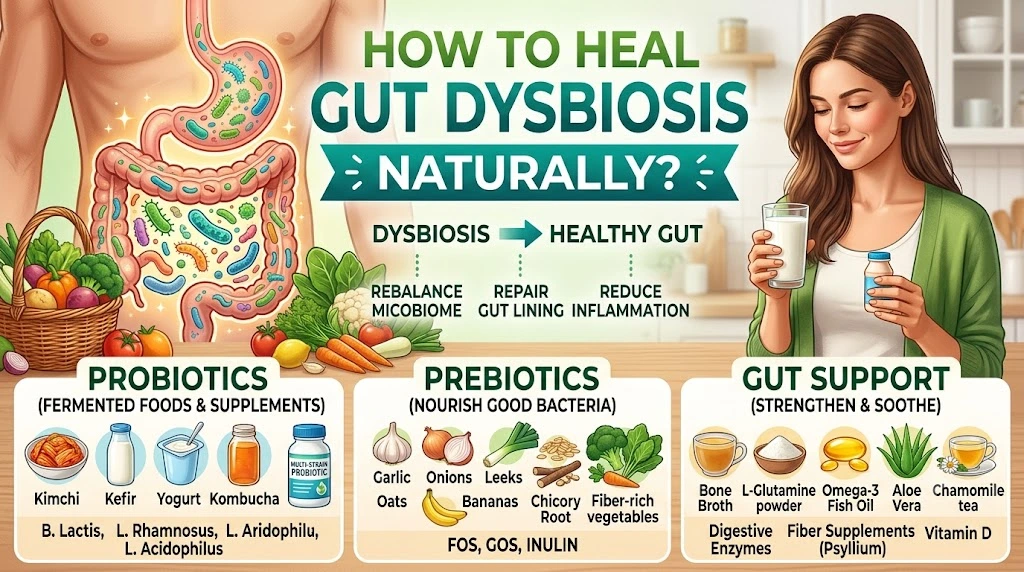
Your gut bacteria respond to what you eat within days. Fiber-rich foods feed beneficial microbes, which ferment that fiber into short-chain fatty acids (SCFAs) like butyrate. These compounds reduce inflammation and strengthen your gut lining.
Processed foods do the opposite. Diets high in sugar, refined carbs, and saturated fat reduce microbial diversity and promote inflammation. Over time, this imbalance—called dysbiosis—can drive bloating, fatigue, and metabolic problems.
Research shows that swapping white bread for high-fiber bread increased gut bacterial diversity in just two weeks. Diet works—but consistency matters.
Best Foods to Improve Your Microbiome
1. Diverse Plant Fibers
Aim for 30+ different plant foods per week. Vegetables, fruits, legumes, whole grains, nuts, and seeds each feed different bacterial species. Variety beats quantity.
2. Fermented Foods
Yogurt, kefir, kimchi, kombucha, miso, and tempeh deliver live microbes. A Stanford study found that a high-fermented-food diet increased microbiome diversity and reduced inflammatory markers in 10 weeks.
3. Prebiotic Foods
Garlic, onions, leeks, asparagus, bananas, oats, and barley contain fibers that selectively feed beneficial bacteria like Bifidobacterium.
4. Polyphenol-Rich Foods
Berries, dark chocolate, green tea, turmeric, and oregano contain polyphenols that promote beneficial microbes and inhibit harmful ones.
5. Omega-3 Rich Foods
Fatty fish, walnuts, and flaxseed support a healthier gut barrier and reduce inflammation.
Probiotics: Do They Help?
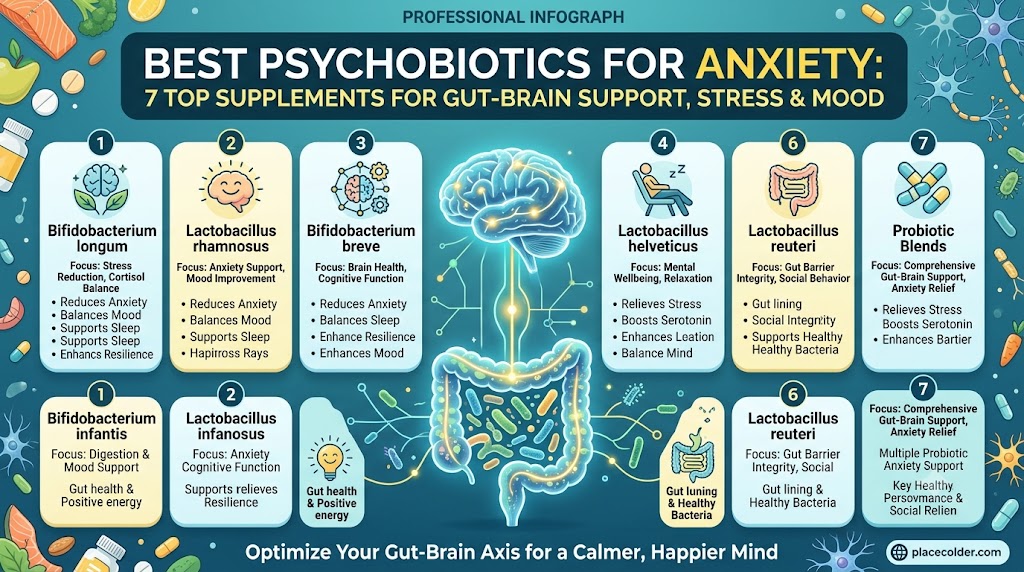
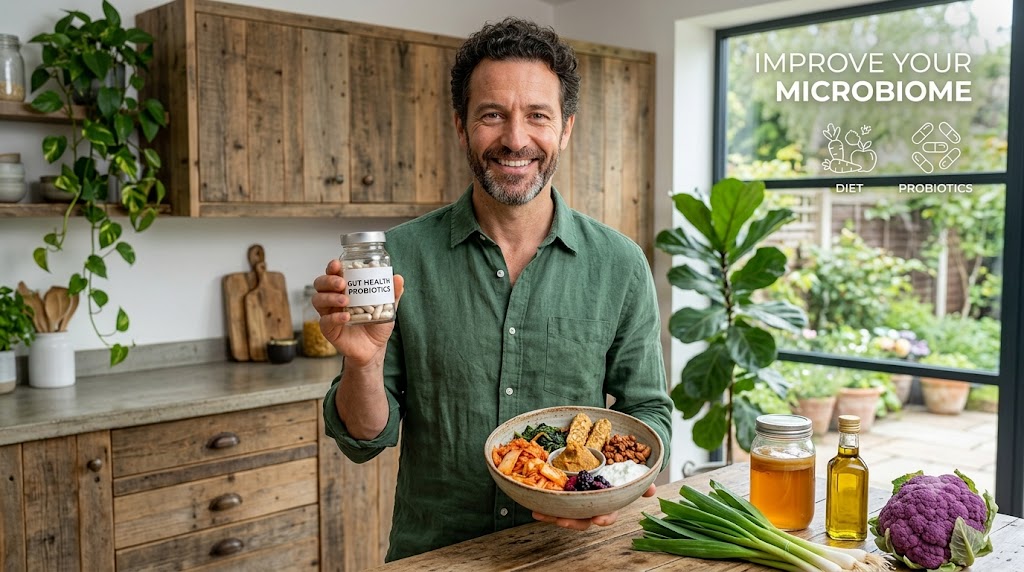
Probiotic supplements can help in specific situations—after antibiotics, during traveler’s diarrhea, or for targeted strains like Lactobacillus rhamnosus. But they rarely improve overall microbial diversity on their own.
Most supplements contain only a handful of strains. Your gut contains hundreds. Introducing a few outsiders rarely reshapes the whole ecosystem.
A Stanford study found that people with low baseline diversity didn’t benefit from fiber alone—they needed fermented foods to rebuild their gut ecosystem, not capsules.
Bottom line: Probiotics are useful tools, not magic bullets. Food first, supplements second.
What to Avoid for a Healthier Gut
1. Ultra-Processed Foods
Packaged snacks, sodas, and processed meats reduce microbial diversity and promote inflammation. Emulsifiers and artificial sweeteners may harm beneficial bacteria.
2. Excess Added Sugar
High sugar intake feeds harmful bacteria and yeast like Candida, crowding out beneficial species.
3. Too Much Alcohol
Regular heavy drinking disrupts the gut barrier and reduces beneficial bacteria. Occasional moderate intake is less harmful, but frequent drinking takes a toll.
4. Unnecessary Antibiotics
Antibiotics save lives but wipe out beneficial bacteria too. Always use them only when medically necessary, and support recovery with fermented foods.
5. Chronic Stress and Poor Sleep
Not food, but they matter. Stress hormones alter gut bacteria composition. Prioritize sleep and stress management alongside diet.
FAQ: Improving Your Microbiome With Diet
Q: How long does it take to improve my microbiome with diet?
A: Some shifts occur within days, but meaningful changes in diversity and function typically take 2–10 weeks of consistent dietary change. The Stanford fermented food study ran 10 weeks; bread-swap studies saw results in 2 weeks.
Q: What is the single best food for gut health?
A: There’s no single best food—diversity is the goal. However, fermented foods like yogurt, kefir, and kimchi have the strongest evidence for increasing microbial diversity and reducing inflammation when eaten regularly.
Q: Are probiotic supplements necessary?
A: Not for most people. Whole fermented foods provide broader microbial exposure. Supplements are most useful after antibiotics or for targeted strain benefits, but they rarely improve overall diversity on their own.
Q: Can I improve my microbiome without supplements?
A: Yes. Diet alone can significantly shift your microbiome. Focus on diverse plant fibers, fermented foods, and reducing ultra-processed foods. Supplements are optional, not essential.
Q: What should I eat after antibiotics to rebuild my gut?
A: Focus on fermented foods (yogurt, kefir, kimchi) and diverse fibers (vegetables, legumes, whole grains). Research suggests whole foods support natural recovery better than probiotic supplements, which may delay recolonization.
Final Thoughts
Improving your microbiome with diet isn’t complicated—it’s just not instant. Eat more plants. Add fermented foods. Cut back on processed junk. Be consistent for weeks, not days.
Probiotics have a role, but they’re not the main event. Your daily plate is.
Start with one change today. Add yogurt to breakfast. Swap white rice for brown. Throw garlic into dinner. Small shifts compound into a healthier gut.
P.S. If you’re dealing with persistent bloating, fatigue, or digestive discomfort, don’t ignore it. Gut imbalance rarely resolves on its own. Take the first step today—your microbiome will thank you in ways you can feel.
Medical Disclaimer: This article is for informational purposes only and does not constitute medical advice. It is not a substitute for professional medical advice, diagnosis, or treatment. Always seek the guidance of your physician or other qualified health provider with any questions about a medical condition or before making dietary changes. If you have a diagnosed digestive condition or take medications, consult your healthcare provider before altering your diet or adding supplements.
Affiliate Disclosure: This article contains affiliate links. If you purchase through these links, we may earn a small commission at no additional cost to you. We only recommend products we believe may be helpful based on available research and quality standards.