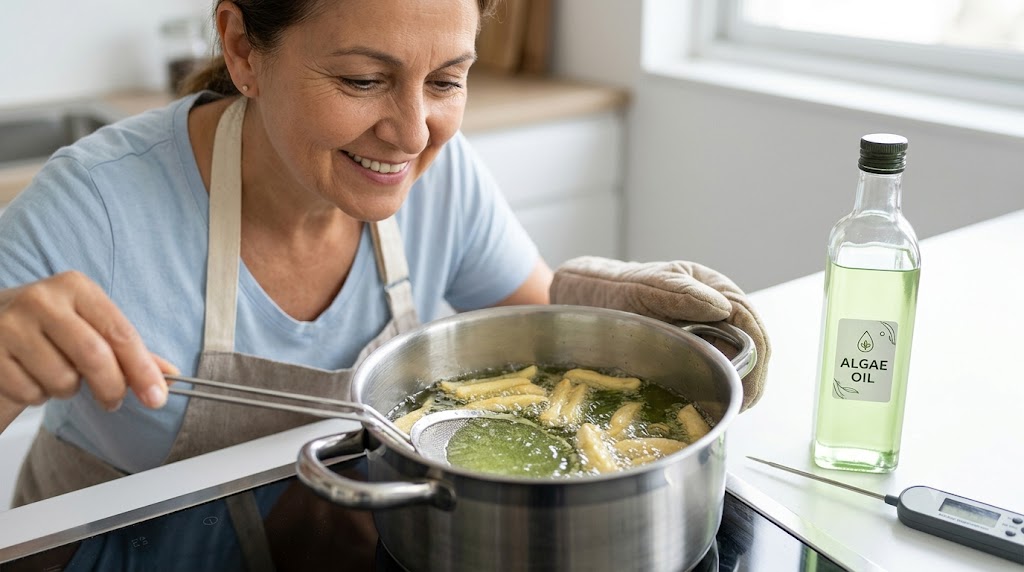
Yes, you can reuse algae cooking oil multiple times—but “multiple” doesn’t mean unlimited. The answer depends heavily on what you’re cooking, how you’re filtering it, and how you’re storing it. Algae oil’s high smoke point and oxidative stability give it a real edge over many traditional oils when it comes to reheating, but the same rules that apply to any frying oil still apply here: watch the oil, not the calendar.
The short version: for light sautéing, you might get 2–4 uses. For deep frying, fewer. Once the oil darkens, foams, or smells off, it’s done—no matter how expensive it was.
Why Algae Oil Holds Up Better Than Most
Algae cooking oil is predominantly monounsaturated fat—often over 90% oleic acid, depending on the brand. That matters for reuse because monounsaturated fats are far more resistant to oxidation than polyunsaturated fats. When oil oxidizes, it breaks down into compounds that taste bad and may be harmful. The fewer polyunsaturated fats, the slower that process.
Algae oil also has an exceptionally high smoke point, with some chef-grade versions reaching 535°F. A higher smoke point means you can cook at higher temperatures before the oil starts degrading. And according to FDA-reviewed data, high-oleic algal oil produces substantially fewer toxic aldehydes when heated to frying temperatures compared to other common vegetable oils. That’s a meaningful safety advantage when you’re reheating oil.
How Many Times Can You Actually Reuse It?
There’s no universal number, and any brand claiming otherwise is oversimplifying. The real answer depends on three variables:
What you’re cooking. Frying breaded chicken or battered fish leaves behind more particles and moisture than sautéing onions. The more debris and water in the oil, the faster it degrades. Algae oil’s neutral flavor means it won’t mask off-flavors as readily as stronger oils, so you’ll notice degradation sooner.
How you filter it. After each use, let the oil cool slightly, then strain it through a fine-mesh strainer lined with cheesecloth or a coffee filter. Removing food particles is the single most important step for extending reuse life.
How you store it. Keep used algae oil in a sealed container away from light and heat. A cool, dark cupboard is fine for short-term storage. For longer gaps between uses, refrigeration slows oxidation further.
Signs Your Algae Oil Is Done
Don’t rely on a stopwatch. Use your senses and a few objective markers:
- Dark color or murky appearance — fresh algae oil is light and clear
- Foaming that doesn’t subside — a sign of breakdown
- Blue-grey smoke at normal cooking temperatures — the oil is burning
- A rancid, acrid, or “off” smell — oxidation has set in
- Thickened or sticky consistency — the oil has polymerized
The FSSAI’s guidelines for used cooking oil are clear on this: oil with total polar compounds beyond 25% is considered hazardous and should be discarded. You can’t measure that at home, but the sensory signs above are your best proxy.
Q&A: Is Algae Cooking Oil Good for You? A Complete Health Guide
Q: Is algae cooking oil actually healthy, or is it just marketing?
A: It’s genuinely a heart-healthy oil, but it’s not magic. Algae oil is extremely high in monounsaturated fats—typically 90%+ oleic acid—with very low saturated fat and minimal polyunsaturated fat. That profile is associated with improved cholesterol levels and reduced inflammation. The FDA has granted GRAS (Generally Recognized as Safe) status to high-oleic algal oil, and no adverse events have been reported from its consumption. What it doesn’t have is the polyphenol content of extra virgin olive oil. If antioxidants are your priority, olive oil still wins there.
Q: What does algae cooking oil taste like?
A: Almost nothing—which is the point. It’s a light, neutral oil with a very subtle buttery note. You won’t taste fish, seaweed, or anything “oceany.” That neutrality makes it excellent for baking, frying, and any dish where you don’t want the oil to compete with other flavors. If you want oil that adds flavor, stick with olive oil for finishing.
Q: Algae oil vs olive oil—which should I cook with?
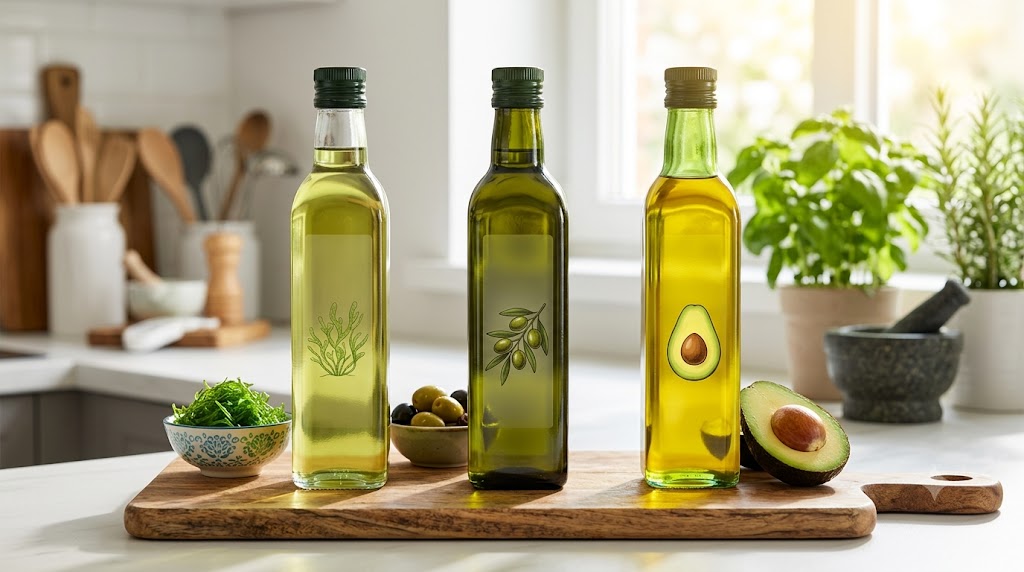
A: Use both, for different jobs. Algae oil wins for high-heat cooking: its 535°F smoke point dwarfs olive oil’s roughly 400°F, and it won’t turn bitter under intense heat. Olive oil— especially extra virgin—is better for cold applications, dressings, and low-heat finishing where its flavor and polyphenols shine. If you had to pick one for all-purpose cooking, algae oil is more versatile because of its heat tolerance and neutral taste.
Q: Is algae oil the healthiest cooking oil available?
A: “Healthiest” is a slippery word. Algae oil has one of the best fatty acid profiles for heart health among cooking oils, and its high smoke point means fewer toxic breakdown products when heated. But olive oil has antioxidants that algae oil lacks. Avocado oil has a similar fat profile. The healthiest choice is often the one you’ll actually use for the right application—and for high-heat cooking, algae oil is a strong contender.
Q: Does algae cooking oil go bad? Storage tips?
A: Yes, it can go bad, though its monounsaturated fat content makes it more shelf-stable than polyunsaturated oils. Store unopened bottles in a cool, dark place. Once opened, use within a few months for best quality. Used oil should be filtered, sealed, and refrigerated if you’re not using it within a few days. Heat, light, and oxygen are the enemies—keep all three away.
Algae Oil vs Seed Oils: What’s the Real Difference?
Seed oils like soybean, corn, sunflower, and canola are typically high in polyunsaturated fats (omega-6), which oxidize more easily when heated. Algae oil flips that ratio: it’s mostly monounsaturated, making it more stable under heat and less prone to forming harmful compounds during repeated frying. If reducing processed seed oils is your goal, algae oil is a practical swap—especially for high-heat cooking.
Best Algae Cooking Oil Brands: Our Top Picks
When choosing an algae cooking oil, look for high-oleic varieties, a smoke point above 500°F, and third-party testing for purity. Our top recommendation delivers on all three—and it’s the one we personally reach for when frying or sautéing at high heat.
👉 Check the Best Algae Cooking Oil Here
How to Use Algae Cooking Oil in Your Kitchen
- Sear and fry — its 535°F smoke point handles steak, stir-fry, and deep frying with ease.
- Bake — neutral flavor won’t interfere with cakes, muffins, or breads.
- Sauté — use it for everyday cooking when you want the food’s flavor to lead.
- Dressings and dips — while neutral, it works in vinaigrettes if you don’t want an olive oil taste.
- Reuse smartly — filter after each use and store in a cool, dark place.
Algae Oil vs Olive Oil: Which Should You Cook With?
For high-heat cooking, algae oil is the safer, more stable choice. For cold applications and antioxidant benefits, extra virgin olive oil remains the gold standard. Many home cooks keep both on hand—algae oil for the pan, olive oil for the plate.
The Bottom Line
Algae cooking oil is a genuinely reusable oil, and its stability gives it an edge over seed oils and even olive oil for repeated high-heat cooking. But reuse is a judgment call, not a rule. Filter it, store it well, and trust your senses. When it darkens, foams, or smells wrong, let it go—your health is worth more than the cost of a fresh bottle.
👉 Grab Our Top Pick for Algae Cooking Oil
Affiliate Disclosure
This article contains affiliate links. If you purchase a product through one of these links, we may earn a small commission at no additional cost to you. This helps support our research, testing, and content creation so we can continue bringing you honest, well-researched information.
Our recommendations are based on genuine research, ingredient analysis, and user feedback. We only recommend products we believe offer real value. Affiliate partnerships never influence our editorial opinions or ratings.
Health & Medical Disclaimer
The information provided in this article is for general educational and informational purposes only and is not a substitute for professional medical advice, diagnosis, or treatment. Always consult a qualified physician, registered dietitian, or healthcare provider before making changes to your diet, cooking practices, or health regimen—especially if you are pregnant, nursing, managing a medical condition, or taking medication.
Statements regarding algae cooking oil, its health benefits, smoke point, reuse, and nutritional profile have not been evaluated by the FDA or any equivalent regulatory body. Individual results and tolerances may vary. Never disregard professional medical advice or delay seeking it because of something you have read here.
Food Safety Disclaimer
Reusing cooking oil—including algae oil—carries inherent risks if done improperly. Always follow local food safety guidelines, discard oil that shows signs of degradation (darkening, foaming, rancid odor, or thickening), and never reuse oil that has come into contact with raw meat, poultry, or seafood without proper handling. When in doubt, throw it out.
P.S.
P.S. — If you’re ready to try algae cooking oil for yourself, we’ve linked our top pick below. It has the high smoke point, neutral flavor, and stability that make reuse practical and safe. 👉 Check the Best Algae Cooking Oil Here
G.V. (General Verification)
G.V. — General Verification: All health, nutrition, and safety claims in this article were cross-referenced against publicly available sources, including FDA GRAS notices, FSSAI used-oil guidelines, and peer-reviewed studies on high-oleic oils. Product details and pricing were accurate at the time of publication but may change. Always verify current product information on the retailer’s page before purchasing.