Introduction: The Italian Frying Paradox
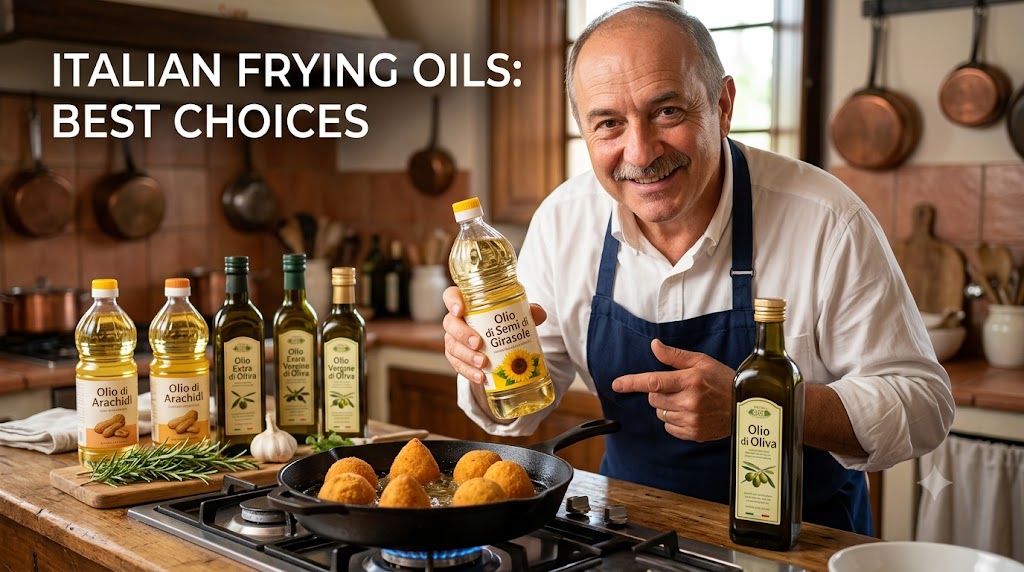
Ask anyone what oil Italians use for frying, and the romantic answer is immediate: extra virgin olive oil. The golden, fragrant, antioxidant-rich cornerstone of the Mediterranean diet. And for centuries, across much of Italy, that answer was historically true. Olive oil, particularly the robust extra virgin varieties, was the primary frying medium wherever olives grew in abundance.
But here is the paradox that frustrates home cooks and surprises travelers: walk into a friggitoria in Naples, a restaurant in Sorrento, or a busy trattoria in Sicily, and you may not smell olive oil at all. You might smell something nuttier. Lighter. Cheaper. And while it may not fit the romantic narrative, it is undeniably Italian.
The truth is that Italian frying is regional, practical, and surprisingly modern. Extra virgin olive oil remains the soulful choice for home frying and traditional preparations. But peanut oil dominates commercial kitchens across the South, and high-oleic sunflower oil is the rising star of the Italian food industry, engineered specifically to replicate olive oil’s frying performance at a fraction of the cost.
This article compares the seven best oils Italians actually use for high-heat frying, from the traditional to the industrial, and explains when each one earns its place in the pan.
Why Italian Frying Begins (and Sometimes Ends) with Extra Virgin Olive Oil
For traditional Italian home cooking, extra virgin olive oil is the gold standard for frying. This is not merely a cultural preference; it is a matter of chemistry and sensory identity.
Extra virgin olive oil contains natural antioxidants, particularly tocopherols, which remain unaltered because the oil is cold-pressed and unrefined. These antioxidants provide resistance to oxidation at frying temperatures. The Associazione Verace Pizza Napoletana, the guardians of authentic Neapolitan pizza, explicitly recommends extra virgin olive oil for its “greater resistance to oxidation and stability at high temperatures”. They further specify that the oil should be “delicate” in character, avoiding sour-pungent aftertastes that would dominate the food.
Practical frying temperatures sit around 350°F (175°C) for most Italian preparations—from zeppole to carciofi alla giudia. The smoke point of extra virgin olive oil ranges from 350°F to 410°F depending on free fatty acid content, meaning a good-quality EVOO can handle the job without breaking down.
There is also the matter of flavor transfer. Ligurian recipes, for example, specify Ligurian extra virgin olive oil for frying battered vegetables and fish, embracing the way the oil’s peppery notes become part of the dish. This “covering effect,” as Italian food writers sometimes call it, is both a virtue and a limitation. It is a virtue when the oil complements the food. It is a limitation when the oil overwhelms delicate flavors or when cost prohibits its use in high-volume frying.
Extra virgin olive oil — the traditional Italian frying choice, rich in antioxidants and flavor.
The Regional Reality: Peanut Oil in Southern Italy
Here is where the romantic narrative meets the street. In Campania, Sicily, and parts of Puglia, the oil you will most frequently encounter in commercial frying is peanut oil (olio di arachidi). In fact, discussions among travelers with nut allergies frequently surface the warning that fried foods in the Sorrento and Amalfi Coast region are often fried using peanut oil, catching visitors off guard.
Why peanut oil? The answer is cost and performance. Peanut oil has a high smoke point—refined peanut oil reaches approximately 446°F (230°C)—and its composition is predominantly monounsaturated fatty acids, making it “very similar to olive oil” in stability. Italian peanut oil producers like Benvolio 1938 market their product explicitly for frying, noting that it is “highly stable at high temperatures and does not produce substances harmful to the body during frying”.
Peanut oil also has a neutral, lightly roasted flavor that does not dominate the food the way a robust olive oil might. For a friggitoria producing hundreds of crocchè and frittatine a day, that neutrality is an advantage, not a compromise.
The regional divide is real. In the North, where olive oil production is less dominant and butter historically reigned, frying traditions differ. But in the Mezzogiorno, where frying is a daily art form, peanut oil is the workhorse of the commercial kitchen, while extra virgin olive oil remains the home cook’s preference for smaller batches.
The Commercial Revolution: High-Oleic Sunflower Oil and “Frienn”
The most significant development in Italian frying oil is not ancient. It is a product of the last decade: high-oleic sunflower oil engineered to mimic extra virgin olive oil’s frying characteristics.
The flagship example is Frienn, developed by Olitalia in collaboration with Chef Pasquale Torrente, the “king of fried food” from Salerno, and validated by the University of Bologna. Frienn is 100% high-oleic sunflower oil (80% oleic acid) enriched with tocopherols and rosemary extract as natural antioxidants. It is palm oil-free, stable at high temperatures, and boasts one of the highest smoke points of any oil on the Italian market.
The design goal was explicit: replicate the performance of extra virgin olive oil at a cost accessible to restaurants and food manufacturers. Frienn transfers less color and flavor than EVOO, preventing the “covering effect” that can mask delicate fried foods. It also completely prevents foaming, a common problem when frying in olive oil that has accumulated food particles.
Olitalia reports that Frienn is the most purchased and preferred frying oil among Italian chefs in the frying and deep-frying segment. This is not a niche product. It represents a structural shift in how Italy fries at scale: away from the expensive, flavor-forward EVOO and toward engineered seed oils that deliver stability, neutrality, and cost-efficiency.
High-oleic sunflower oil — the modern Italian choice for professional high-heat frying.
Light Olive Oil: The Practical Compromise
Between extra virgin olive oil and seed oils lies light olive oil—sometimes labeled “Mild & Light” or simply “olive oil” (a blend of refined and virgin olive oils). This is what many Italian home cooks reach for when they want the frying performance of olive oil without the assertive flavor and high cost of EVOO.
Brands like Filippo Berio market Mild & Light Olive Oil explicitly as “the ideal choice for frying, stir-frying and baking,” emphasizing its high smoke point and light bouquet that “allows the natural flavour of food to come through”. This is a refined olive oil, meaning its free fatty acid content is very low, resulting in a smoke point between 390°F and 470°F—significantly higher than most extra virgin olive oils.
From a culinary perspective, light olive oil is the pragmatic Italian choice for shallow-frying melanzane, zucchine, or fish when you want the health profile of olive oil but a cleaner, more neutral result. It is also more economical for larger batches than a high-quality estate EVOO.
The Sunflower and Seed Oil Question
Not all Italian frying uses olive or peanut oil. Standard sunflower oil and seed oil blends are common in industrial and budget-conscious settings. Sagra, a line from Salov (the producer behind Filippo Berio), offers a range of seed oils for frying including corn, peanut, sunflower, high-oleic sunflower, grape seed, and “Frimax”—a blend of sunflower and high-oleic sunflower oils without palm oil.
The key distinction here is between standard sunflower oil and high-oleic sunflower oil. Standard sunflower oil is high in polyunsaturated fats and less stable at frying temperatures. High-oleic sunflower oil, by contrast, is 80%+ monounsaturated, making it comparable to olive and peanut oil in oxidative stability. When Italians use sunflower oil for frying, the high-oleic variety is increasingly the default for anyone paying attention to performance.
7 Best Italian Cooking Oils Compared for High-Heat Frying
| Oil | Smoke Point | Best For | Flavor Impact | Cost | Italian Authenticity |
|---|---|---|---|---|---|
| Extra Virgin Olive Oil | 350–410°F | Traditional home frying, Ligurian batter, Neapolitan pizza | Assertive; becomes part of dish | High | Highest |
| Light Olive Oil | 390–470°F | Shallow frying, when you want olive oil without the flavor | Neutral to mild | Moderate | High |
| Peanut Oil (Refined) | 446°F | Commercial frying in Campania and Sicily; friggitoria-style | Neutral, lightly nutty | Moderate | High in South |
| High-Oleic Sunflower (Frienn) | Highest on Italian market | Professional frying, delicate foods, high-volume | Very neutral | Moderate | Modern Italian |
| Standard Sunflower Oil | ~440°F | Budget frying, industrial use | Neutral | Low | Common but not traditional |
| Grape Seed Oil | 400°F | Specialty frying, tempura-style | Very neutral | Moderate-High | Niche |
| Corn Oil | 450°F | Industrial frying, blends | Neutral | Low | Industrial |
*Smoke point data synthesized from INRAN, USDA, and industry sources.
Which Oil Should You Actually Use?
The answer depends on who you are and what you are frying.
If you are a home cook making a small batch of fried zucchini or a few zeppole, use extra virgin olive oil. Buy a delicate, non-pungent variety. You will get the traditional Italian experience, the antioxidants, and the flavor that makes Italian frying distinct.
If you are frying for a crowd or running a restaurant, use peanut oil or high-oleic sunflower oil. These oils give you stability, neutrality, and cost-efficiency. Peanut oil is the Southern Italian commercial standard. High-oleic sunflower oil like Frienn is the engineered Italian solution that was designed precisely for this purpose.
If you want olive oil’s health profile with a cleaner flavor, use light olive oil. It is the unsung hero of Italian home frying.
The one oil you should not use for high-heat frying is standard, unrefined sunflower oil or any oil whose smoke point you cannot verify. Walnut oil, once used in Piedmont, has a smoke point around 320°F and is unsuitable for modern frying temperatures.
FAQs About Italian Frying Oils
Yes, particularly at home and in traditional preparations. Extra virgin olive oil is recommended by the Associazione Verace Pizza Napoletana for its oxidative stability. Ligurian recipes specify local extra virgin olive oil for frying battered vegetables. However, commercial frying often uses peanut or high-oleic sunflower oil.
For deep frying at home, extra virgin olive oil or light olive oil. For commercial deep frying, peanut oil is the traditional Southern Italian choice, while high-oleic sunflower oil (like Frienn) is increasingly dominant.
Yes. Peanut oil is widely used for frying in Campania, Sicily, and Southern Italy, particularly in restaurants and friggitorie. Travelers with nut allergies should inquire before eating fried foods in these regions.
There is no single best oil. Extra virgin olive oil is best for traditional flavor and home use. Peanut oil is best for commercial Southern Italian frying. High-oleic sunflower oil is best for high-volume, neutral-flavored frying with maximum stability.
Yes. Extra virgin olive oil smoke points range from 350–410°F, sufficient for typical frying temperatures around 350°F. Refined olive oil (light olive oil) has a smoke point of 390–470°F.
Olitalia produces Frienn, a high-oleic sunflower oil with rosemary extract and tocopherols, designed as a professional frying oil that replicates extra virgin olive oil’s performance at lower cost.
Disclosure: This article contains affiliate links. If you purchase through these links, we may earn a small commission at no additional cost to you. This helps support our independent content. Product recommendations are based on research and culinary consensus, not commission rates.
Disclaimer: Smoke points vary by brand, refinement level, and freshness. Always check the label and never heat any oil beyond its smoke point. If you have a peanut allergy, exercise extreme caution when eating fried foods in Southern Italy, as peanut oil is commonly used in commercial frying. This article is for informational purposes only and does not constitute medical or dietary advice.
PS: The next time you bite into a perfectly crisp zeppola in Naples or a golden carciofo alla giudia in Rome, consider what carried the heat. It might be the ancient soul of extra virgin olive oil, or it might be the modern engineering of a high-oleic sunflower. Both are Italian. Both are delicious. And now you know the difference.