By Dr. Mohammed Abdul Azeem Siddiqui (30 Years of Clinical Practice)
After three decades in practice, I have seen a dramatic shift in patient awareness. People are no just asking “Do I need this vitamin?” They are asking “Why do I still feel terrible even though I’m taking it?”

After three decades in practice, I have seen a dramatic shift in patient awareness. People are no longer just asking “Do I need this vitamin?” They are asking “Why do I still feel terrible even though I’m taking it?”
Nowhere is this paradox more common than with Zinc.
In my clinic, I stopped treating zinc as just an “immune booster” years ago. I now treat it as a cognitive regulator. Why? Because the brain is a metal-dependent organ. And when zinc levels are off—too little, too much, or the wrong chemical form—it doesn’t just hit your white blood cells. It hits your executive function.
You aren’t just getting sick. You are getting slow. Here is what 30 years of blood work and patient outcomes have taught me about Zinc and Brain Fog.
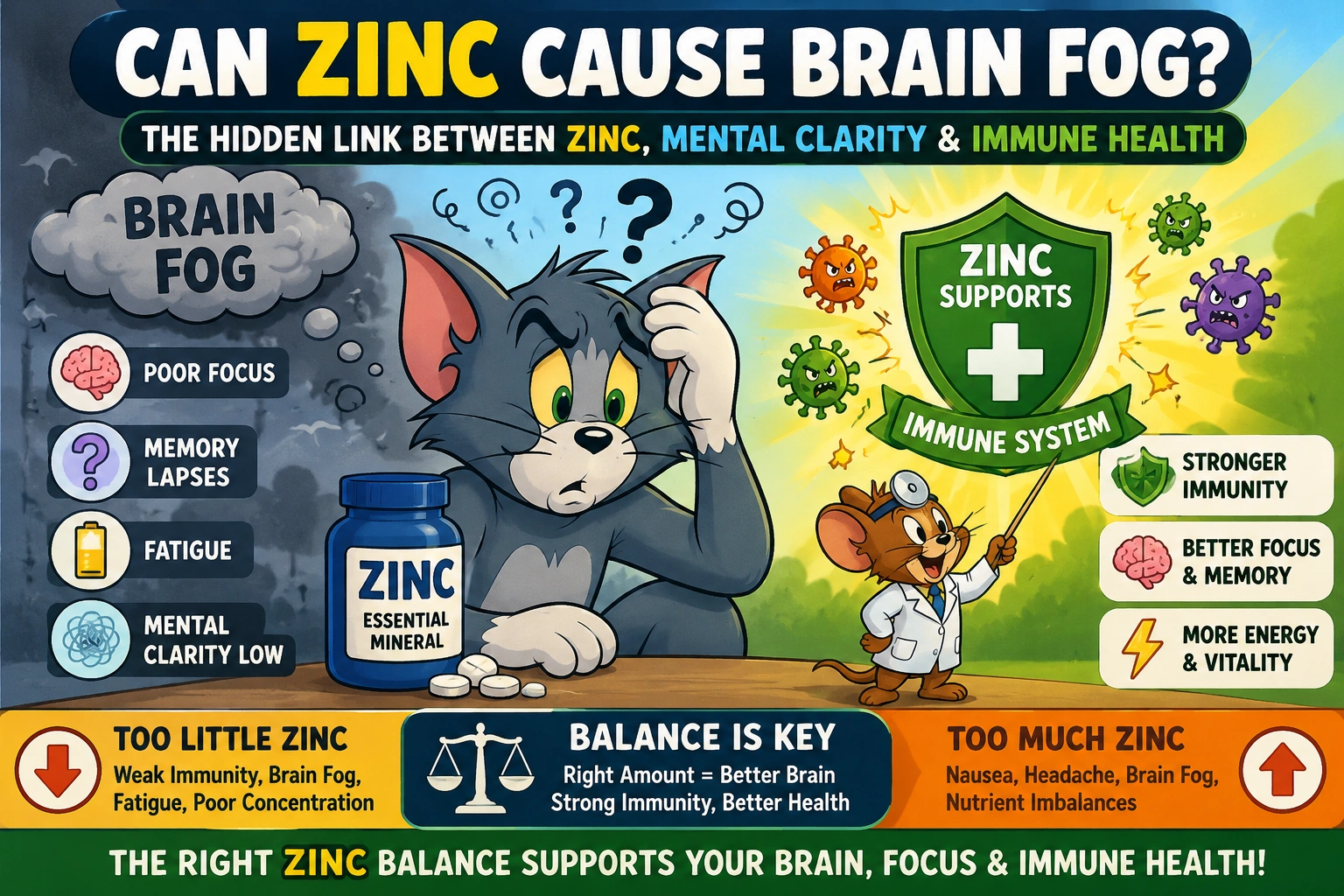
Have you been experiencing brain fog, poor concentration, memory lapses, or unexplained fatigue and wondered whether zinc could be involved? While zinc is best known for supporting the immune system, wound healing, and overall health, its role in brain function is often overlooked.
Surprisingly, both zinc deficiency and excessive zinc intake can affect mental clarity, energy levels, and cognitive performance. In some cases, low zinc levels may contribute to brain fog and weakened immunity, while taking too much zinc can disrupt the balance of other essential nutrients, potentially leading to neurological symptoms.
In this article, we’ll explore the science behind the zinc–brain connection, examine how zinc influences focus and immune health, and help you determine whether your zinc status could be affecting how you think and feel.
The “Quiet” Deficiency: Why Your Processor Is Lagging
Most doctors check for anemia or thyroid issues when a patient complains of brain fog. I check zinc levels.
Zinc is the structural integrity of the synapse. It modulates the NMDA receptor—the gatekeeper of memory formation. If you are deficient, think of your brain as a computer with failing RAM. You open a file, but it takes 10 seconds to load. You walk into a room and forget why.
The Signs of Too Little Zinc (The “Low & Slow” Profile):
- Word-finding difficulty: The noun is on the tip of your tongue, but it won’t arrive.
- Olfactory issues: Zinc is crucial for smell. If your coffee smells bland, your brain isn’t firing correctly.
- “Static” vision: Seeing floaters or visual snow.
- Leaky gut: A permeable gut releases LPS (lipopolysaccharides) into the blood, which crosses the blood-brain barrier and triggers neuroinflammation.
Why the standard RDA fails: You need zinc to make enzymes that digest protein. If you are deficient, you cannot digest the meat you eat to get more zinc. It is a cruel metabolic loop.
The “Darth Vader” Effect: Taking Too Much
Here is the warning I scribble on 40% of my charts: “Stop the 50mg lozenges.”
The supplement industry sold you the idea that “more zinc equals less cold.” Wrong. Excessive zinc (especially 75mg+ daily) induces copper deficiency. Copper is the cofactor for dopamine beta-hydroxylase. Without copper, you cannot make norepinephrine.
The Signs of Too Much Zinc (The “Flatline” Profile):
- Neurological clunkiness: You aren’t just tired; you feel metallic and hollow.
- Hypocupremia (Low Copper): This presents as a specific type of anemia and demyelination. Your nerves lose their insulation. You feel like you are walking through sand.
- Paradoxical immune suppression: High zinc destroys neutrophils (your first responders).
A Clinical Pearl: If you are taking zinc for longer than 8 weeks without 1-2mg of copper, you are actively damaging your myelin sheath. That “fog” isn’t the flu. It is induced neurodegeneration.
The Hidden Variable: The Wrong Form (Stomach Acid Matters)
You can take the perfect dose, but if you take the wrong salt form, you are swallowing rocks.
For 30 years, I have watched patients fail zinc therapy because they bought Zinc Oxide.
- Zinc Oxide: Insoluble in water. Requires high stomach acid to break down. If you are over 50 (low acid) or on PPIs for heartburn, Oxide passes right through you. 0% absorption.
- Zinc Gluconate & Citrate: The clinical gold standard for bioavailability. These chelates break down easily and are gentle on the gut.
- Zinc Picolinate: Highly absorbable, but too strong for some. I have seen it induce nausea and acute copper crash in sensitive patients.
The “Wrong Form” Brain Fog: I see this in vegans and geriatric patients. They take Oxide for months. Their blood serum looks “normal” (because the unabsorbed metal is floating in the GI tract), but their cerebrospinal fluid is depleted. The brain is starving while the gut is full of metal.
The 30-Year Protocol (The “Cognitive Clarity” Approach)
If you want to clear the fog, stop guessing. Do this:
- Dose: 15-30mg elemental zinc daily. Never 50mg unless treating Wilson’s disease under supervision.
- The Copper Ratio: Add 1-2mg of Copper Glycinate. Taken 6 hours apart from zinc (they compete for absorption). Zinc in the morning; Copper at dinner.
- The Form: Throw away Oxide. Buy Chelated Zinc (Bisglycinate) or Citrate.
- The Timing: Take zinc with water and protein only. Avoid taking it with coffee, tea, or high-fiber meals (phytates block absorption).
Beyond Brain Fog: Unique Benefits of Zinc You May Not Know
Over 30 years, I have also seen zinc deliver three distinct, often-overlooked advantages:
- Androgen Support (Natural Testosterone Maintenance): Zinc directly influences luteinizing hormone, which signals the testes to produce testosterone. In my male patients over 45, restoring zinc levels to the mid-normal range often improves libido and morning energy without medication.
- Retinal Protection (Night Vision): The retina contains one of the highest zinc concentrations in the body. It is a cofactor for retinol dehydrogenase, an enzyme needed to recycle vitamin A into melanopsin. Chronically low zinc = poor night adaptation and “star bursts” around headlights.
- Taste Acuity (The Forgotten Sensor): Zinc modifies the ion channels on taste buds. I have seen elderly patients complaining of “bland food” who were simply zinc deficient. Restoring zinc brings back the pleasure of eating, which improves protein intake and prevents sarcopenia.
Where to Get Zinc Naturally (Without Relying Only on Pills)
Before supplements, I advise patients to eat from this list. Bioavailability is highest from animal sources:
| Food Source | Zinc (mg per serving) | Notes |
|---|---|---|
| Oysters (6 medium) | 30-40 mg | Gold standard. Eat 1-2x weekly. |
| Grass-fed beef (3 oz) | 5-7 mg | Heme iron + zinc synergy. |
| Pumpkin seeds (¼ cup) | 2.5 mg | Best plant source. Soak to reduce phytates. |
| Lamb (3 oz) | 4-5 mg | Higher zinc than beef. |
| Chickpeas (1 cup cooked) | 2.5 mg | Pair with vitamin C (lemon) to counteract phytates. |
| Cashews (1 oz) | 1.6 mg | Good snack, but calorically dense. |
Vegetarian warning: Phytic acid in legumes and grains reduces zinc absorption by up to 50%. If you are plant-based, you need to eat nearly double the RDA or use a chelated supplement.
The Takeaway
After 30 years, I have learned that the brain is the first organ to complain about nutritional imbalance, and the last to be believed. If your mind feels like a dial-up modem in a 5G world, do not accept “aging” or “stress” as the answer.
Check your zinc. But more importantly, check your copper, your form, and your food sources.
Disclaimer: This article reflects clinical observations and is not a substitute for a complete metabolic panel. Always consult your physician before altering mineral therapies.Nowhere is this paradox more common than with Zinc.