You know the scene. A child stares at a bowl of fresh, ripe strawberries. Nothing. No interest. But hand them a neon-red, strawberry-flavored candy or a tube of strawberry yogurt with zero actual berries? They devour it. They ask for more.
Adults are not immune. Many of us find artificially flavored mango drinks, grape sodas, or blue raspberry candies more satisfying than the real fruit itself.
This is not a matter of bad taste or weak willpower. This is psychology, neuroscience, and digestive biology colliding with modern food engineering.
And the strangest part? While your brain lights up with pleasure, your gut may be quietly sounding an alarm.
Let’s unwrap the psychology of fake fruit taste — and explore the emerging science of what it might be doing to your gut.
Part 1: What Is “Fake Fruit Taste,” Exactly?
Fake fruit taste refers to artificially created or heavily modified fruit-like flavors that mimic, exaggerate, or completely reinvent natural fruit sensations.
These flavors rarely come from real fruit. Instead, they are built from:
- Artificial flavoring chemicals (synthesized in labs)
- Flavor esters (specific compounds like ethyl butyrate for strawberry)
- Aroma engineering (volatile molecules that hit your olfactory system hard)
- Color psychology (bright red = strawberry, neon purple = grape)
- Sweetener combinations (to amplify perceived fruitiness)
- Acidity manipulation (citric acid to mimic tartness)
Here is the kicker: many artificial fruit flavors are not even chemically identical to real fruit.
- Artificial banana is based on isoamyl acetate — a compound from the Gros Michel banana variety that went nearly extinct in the 1950s. Most people have never eaten a real Gros Michel.
- Artificial grape (think: purple candies, soda) tastes nothing like a real Concord or table grape. It is a specific ester called methyl anthranilate.
- Watermelon-flavored snacks often contain no watermelon compounds at all.
Yet your brain accepts these signals as “fruit-like,” especially when paired with bright colors, sugar, and clever marketing.
Part 2: The Psychology — Why Fake Fruit Feels More Addictive Than Real Fruit
Here is where things get fascinating — and a little unsettling.
The Supernormal Stimulus Effect
In biology, a supernormal stimulus is an exaggerated version of a real stimulus that triggers a stronger response than the real thing.
Example: In experiments, birds will abandon their own small, naturally colored eggs to sit on larger, brighter, artificial eggs. The fake egg is more egg-like than an actual egg.
Fake fruit taste is the human equivalent.
Real fruit has fiber, water, subtle aroma, and balanced sweetness. Fake fruit strips away everything except the most intense pleasure signals. It delivers:
- Hyper-concentrated sweetness (often from high-fructose corn syrup or artificial sweeteners)
- Sharp, simple aroma molecules (no complexity, just punch)
- No nutritional “brakes” (fiber triggers satiety; fake fruit has none)
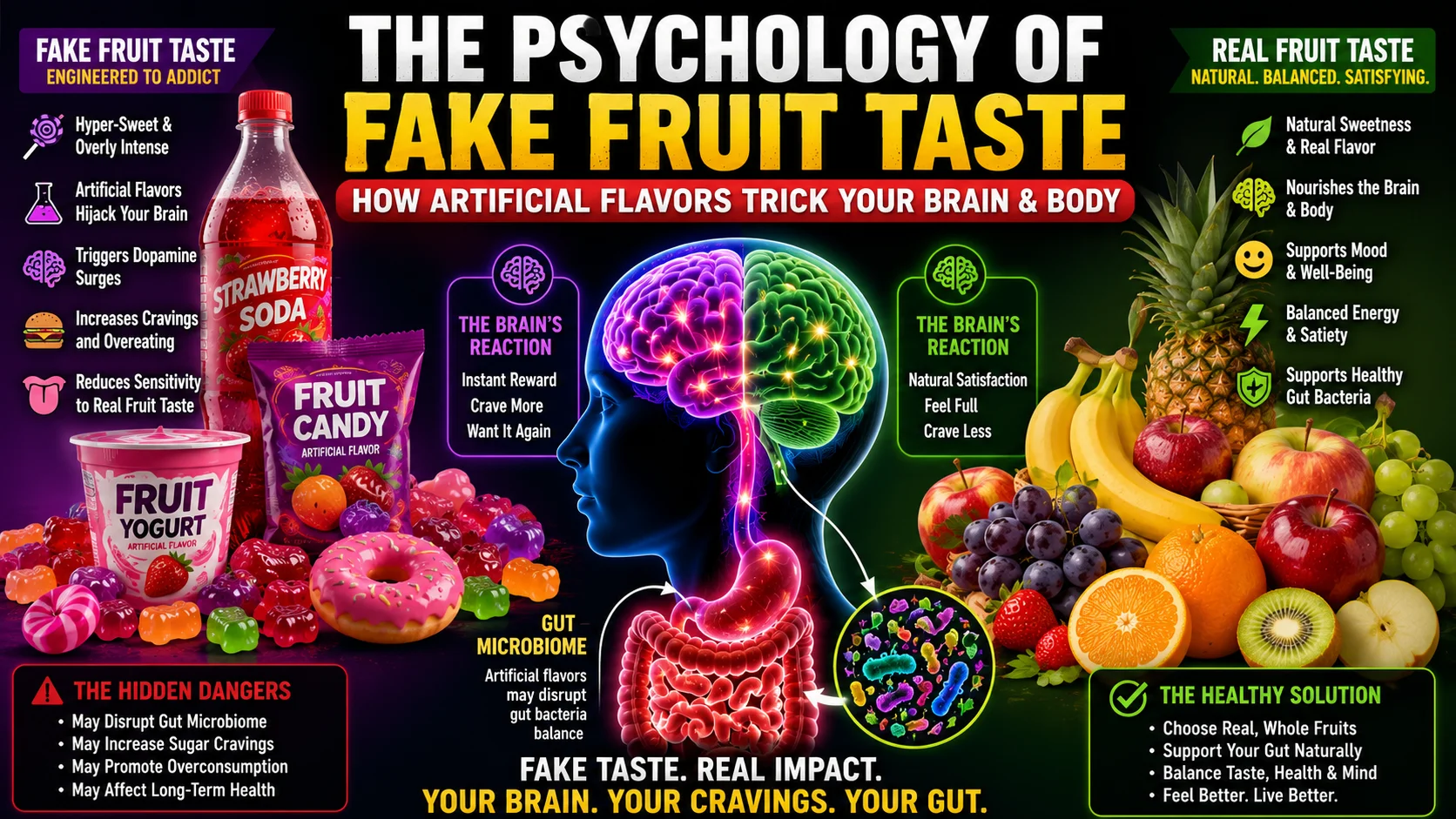
The result? Your brain’s reward system — specifically the nucleus accumbens and dopamine pathways — lights up more intensely for fake fruit than for real fruit.
The Desensitization Loop
Over time, repeated exposure to supernormal stimuli desensitizes your natural taste receptors.
A real strawberry begins to taste weak. Bland. Disappointing.
Your brain learns: fake fruit = big reward. Real fruit = small reward.
This is not imagination. Studies on food reward show that hyper-palatable, flavor-engineered foods can shift preference within weeks. Children exposed to high-intensity artificial fruit flavors often reject whole fruits. Adults report that fresh berries or mangoes “don’t hit the spot” the way a fruit-flavored candy or drink does.
Marketing and Memory
Fake fruit flavors also hijack nostalgia. That blue raspberry candy tastes like childhood birthday parties. That artificial grape soda tastes like summer camp.
Real fruit has no brand loyalty. Fake fruit does.
Food companies engineer flavors to trigger emotional memory — not just taste. This psychological anchoring makes fake fruit feel familiar, comforting, and craveable.
Part 3: The Gut Connection — What May Be Happening Inside You
Now for the frontier science. While psychologists have studied flavor preference for decades, researchers are only beginning to ask: what do fake fruit flavors do to the gut?
The early answers are surprising — and worth paying attention to.
Your Gut Has “Taste Receptors”
You know your tongue has taste buds. But did you know your intestines have chemosensory cells that detect the same molecules?
These cells line your gut wall. They are called enteroendocrine cells, and they “taste” nutrients as food passes through. When they detect real fruit compounds — natural sugars, polyphenols, fiber, organic acids — they send signals to:
- Your brain (via the vagus nerve) → “Fruit arrived. Expect nutrients.”
- Your pancreas → “Release insulin appropriately.”
- Your gut lining → “Adjust motility and absorption.”
Fake fruit flavors confuse this system.
The Mismatch Problem
When you eat a fake-fruit-flavored candy or drink, your mouth screams: “FRUIT!”
Your stomach and intestines receive the same chemical signals — those artificial esters and aroma molecules. But there are no accompanying nutrients. No fiber. No vitamins. No polyphenols.
The gut’s chemosensory cells send mixed signals:
“Fruit detected… but where are the actual nutrients?”
This mismatch may lead to:
- Altered appetite signaling → You do not feel as full. You keep eating.
- Dysregulated insulin response → The body prepares for fruit sugar, but the sugar is often isolated and high-glycemic, leading to spikes and crashes.
- Confused vagus nerve communication → The brain-gut axis gets noisy, unreliable data.
Some researchers hypothesize that chronic exposure to these mismatched signals could contribute to functional digestive issues — bloating, irregular motility, and even low-grade inflammation.
The Microbiome Angle
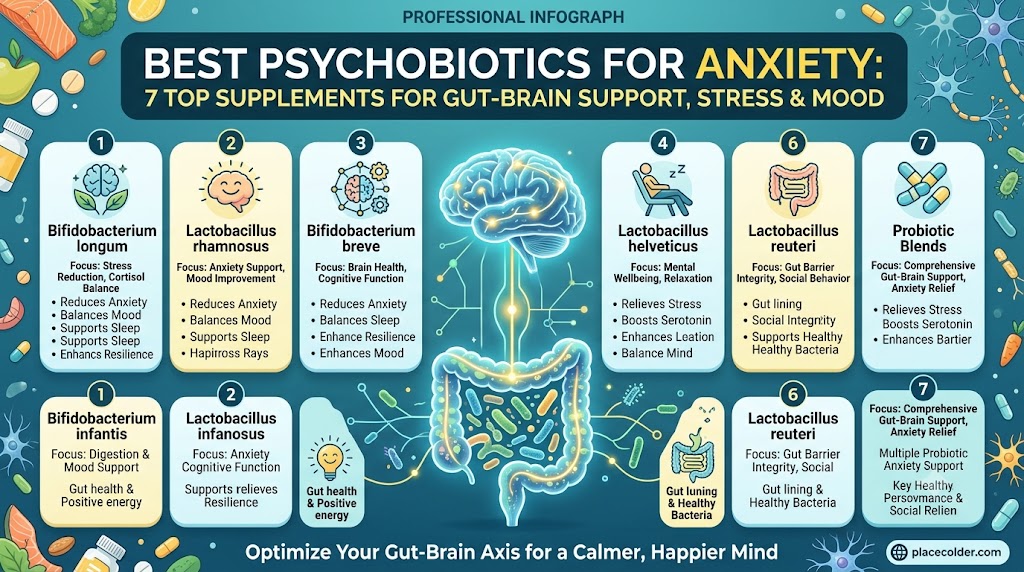
Your gut microbiome — the trillions of bacteria living in your colon — evolved to ferment real fruit fiber and polyphenols. These compounds feed beneficial bacteria like Bifidobacterium and Lactobacillus.
Fake fruit flavors offer zero prebiotic benefit. They are empty sensory noise.
Worse, some artificial flavoring chemicals have been shown in early studies to have mild antimicrobial effects. In petri dishes, certain flavor esters can inhibit bacterial growth. The question is: what happens when you consume them daily for years?
We do not have definitive human studies yet. But the concern is real. A gut microbiome fed on fake fruit — and starved of real fruit fiber — may shift toward a less diverse, less resilient state.
Part 4: The Vicious Cycle — How Fake Fruit Alters Eating Behavior
Here is the cycle that concerns many nutrition scientists:
- You eat fake-fruit-flavored foods (candy, yogurt, drinks, snacks).
- The supernormal stimulus over-rewards your brain’s dopamine system.
- Real fruit tastes bland in comparison.
- You eat less real fruit → less fiber, less polyphenols, fewer gut-nourishing compounds.
- Your gut microbiome declines in diversity and function.
- Cravings for hyper-intense fake fruit flavors increase as natural flavors feel unsatisfying.
- Repeat.
This is not addiction in the clinical sense. But it is a powerful behavioral loop. And it is entirely engineered.
Part 5: What Can You Do? Practical Steps to Reset
The good news: your palate and your gut are plastic. They can change.
Here are evidence-informed steps to break the fake fruit loop:
1. Do a 2-Week “Real Fruit Reset”
Avoid all artificially fruit-flavored products for 14 days. Eat only whole fruits (fresh, frozen, or dried without added sugar). Most people report that real fruit begins to taste sweeter and more satisfying by day 10.
2. Read Labels Carefully
Look for:
- “Artificial flavor”
- “Natural flavor” (can still be highly processed with no real fruit)
- “Fruit flavor” with 0% juice
If the label says “strawberry flavor” but there are no strawberries in the ingredient list? That is fake fruit.
3. Pair Real Fruit with Sensory Boosts
If real fruit feels boring, try:
- Sprinkling cinnamon or ginger on fresh mango
- Freezing grapes for a candy-like texture
- Blending berries with plain yogurt (no added flavors)
You can retrain your brain to find real fruit rewarding again.
4. Support Your Gut While You Transition
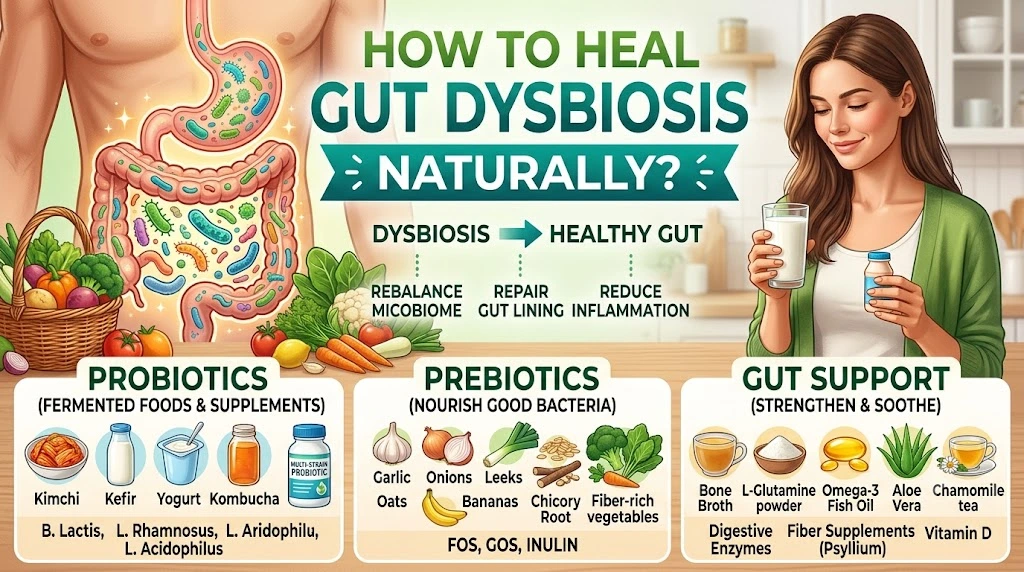
Eat real fruit with skin and pulp (fiber). Add fermented foods (yogurt, kefir, sauerkraut) to support microbiome diversity. Your gut’s chemosensory cells will thank you.
Part 6: The Bottom Line
Fake fruit taste is a masterpiece of modern food engineering. It is psychologically compelling, economically efficient, and intentionally hyper-intense.
But it comes with hidden costs.
Your brain may be hooked on a supernormal illusion. Your gut may be sending distress signals you cannot consciously hear. And over time, the mismatch between what your mouth tastes and what your body receives could shape your eating behavior, your cravings, and even your digestive health.
Understanding the psychology of fake fruit is the first step.
The next step is choosing, more often than not, the imperfect, seasonal, gloriously real fruit — and letting your gut finally get the message it has been waiting for.