Introduction
The roasting pan aisle in 2026 offers more materials than ever, but the decision for most Thanksgiving cooks comes down to two: stainless steel and ceramic. Both can produce a golden, juicy turkey. But they behave very differently in the oven, on the stovetop, and after dinner when you’re staring down a pan crusted with caramelized drippings.
The core question is heat. Which material actually heats better for roasting a turkey? The answer isn’t as simple as “metal conducts faster.” Ceramic has real strengths—even heat distribution and a naturally nonstick surface—but stainless steel dominates in one critical area that matters enormously for turkey: browning and pan gravy.
This guide breaks down the performance differences based on expert testing and product specifications, so you can choose the pan that matches how you actually cook.
Select us as a preferred source in Google:
The Short Answer: Heat Performance Compared
Stainless steel heats more responsively and produces better browning. Tri-ply stainless steel, which sandwiches an aluminum core between stainless layers, distributes heat evenly and creates the flavorful browned bits (fond) that make great gravy. America’s Test Kitchen and Wirecutter have repeatedly ranked clad stainless pans at the top of roasting pan tests.
Ceramic heats evenly but less efficiently for roasting. Ceramic does not conduct heat as efficiently as stainless steel or carbon steel, which means dense roasts may require slightly extended cooking times. However, ceramic’s even heat distribution prevents hot spots, and its nonstick surface releases food easily.
In practical terms: stainless steel gives you better crust and better gravy. Ceramic gives you easier cleanup and a more forgiving surface for sticky glazes.
How Stainless Steel Roasting Pans Perform
The Heat Advantage
Tri-ply stainless steel is the gold standard for roasting pans because it combines two materials: an aluminum core for heat conductivity and stainless steel exterior layers for durability. The result is even heating across the pan’s surface, which means the turkey browns consistently from center to edge.
Serious Eats tested the Tramontina stainless roasting pan and found that its shallow but substantial sides made it easy to achieve “perfectly golden” skin, while tall-sided pans tended to trap steam and produce “wan roast with flabby skin.” This is a critical point: for turkey, low sides and good heat conduction beat deep walls every time.
The Gravy Advantage
Stainless steel can go from oven to stovetop. After the turkey rests, you can deglaze the pan directly on a burner, scraping up the fond with wine or stock to build a rich gravy. The Kitchn noted that the flat bottom of a tri-ply stainless pan “meant that making gravy in it was a breeze.”
The Cleanup Trade-off
Bare stainless steel is not nonstick. Burned-on bits will require soaking and scrubbing. Food & Wine recommends sticking to wooden or silicone utensils to avoid scratching the polished interior, and Cuisinart recommends hand washing for its MultiClad Pro. If you roast once a year, this is a minor inconvenience. If you roast weekly, it becomes a routine.
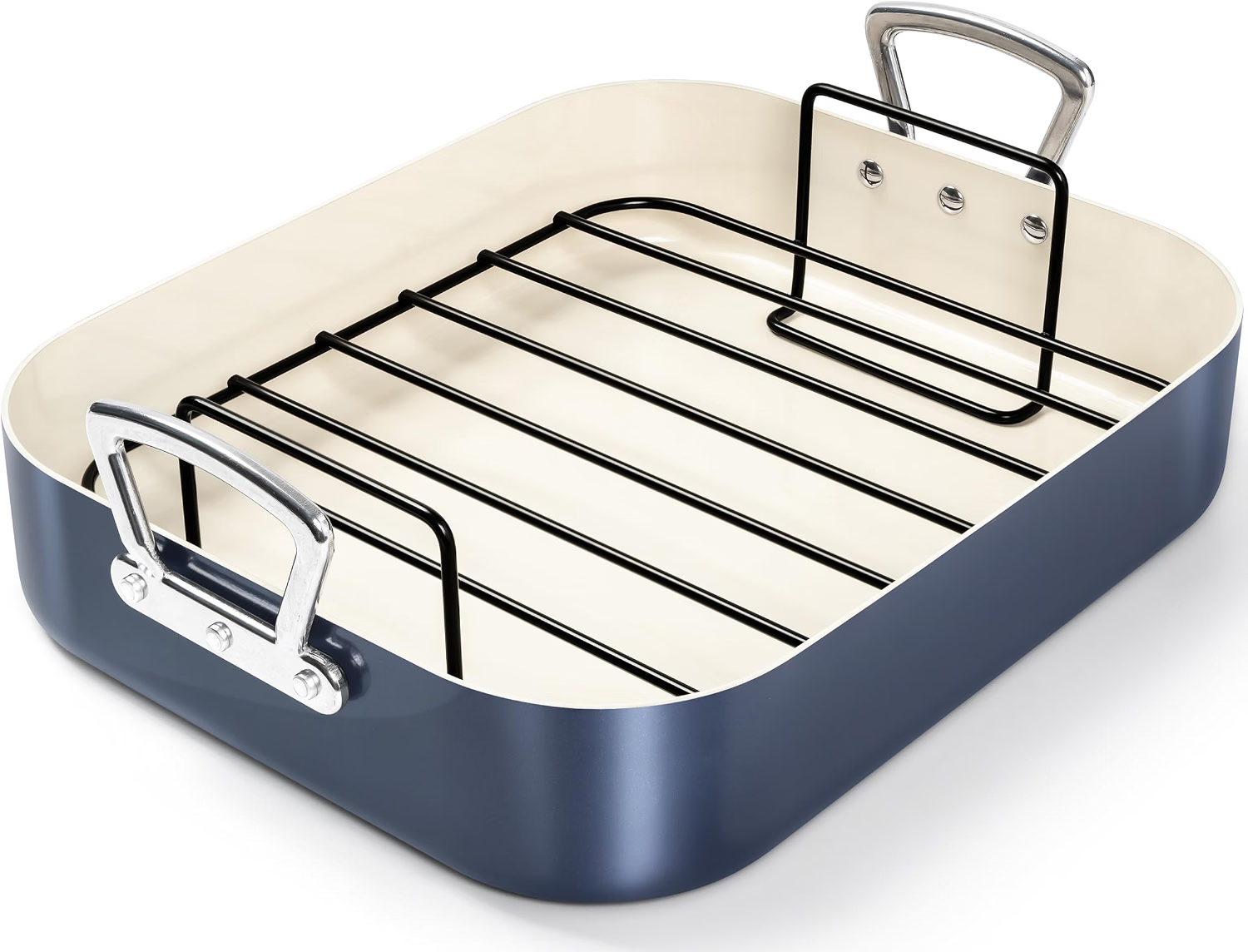
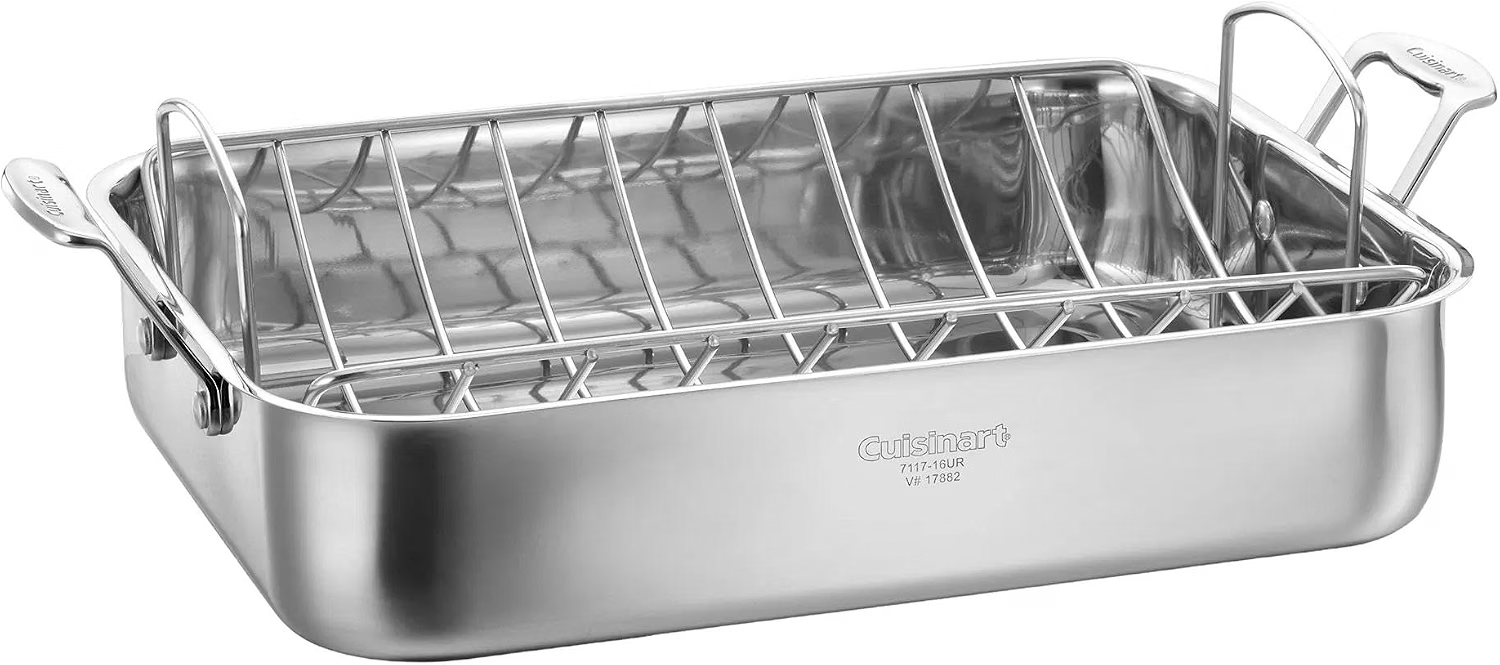
Tramontina 16-Inch Stainless Steel Roasting Pan with Rack
The tri-ply workhorse for browning and gravy
This Tramontina roaster is the pan Serious Eats tested and praised for its shallow sides and even heat. The tri-ply construction (stainless-aluminum-stainless) delivers consistent browning and a flat bottom that works on the stovetop for deglazing. It ships with a V-rack that elevates the bird for airflow underneath.
Pros: Even tri-ply heating, stovetop-safe for gravy, shallow sides promote crispy skin
Cons: Not nonstick; requires soaking and hand washing
Capacity: Fits a standard 16–20 pound turkey
 Check Price on Amazon
How Ceramic Roasting Pans Perform
The Even-Heat Reality
Ceramic stoneware distributes heat gently and evenly, which prevents scorching and hot spots. For casseroles, baked pasta, and slow braises, this is ideal. For turkey, the picture is more complicated. Ceramic’s heat transfer is slower than metal, so the pan takes longer to come to temperature and may not deliver the same aggressive browning on the turkey’s underside and edges.
Ceramic-coated pans (as opposed to solid stoneware) use a metal base—often aluminized steel or carbon steel—with a ceramic nonstick coating. These perform closer to metal pans in terms of responsiveness while offering easier release. The Caraway roaster, for example, is rated oven-safe to 550°F and can be used on the stovetop, making it more versatile than traditional stoneware.
The Cleanup Advantage
This is where ceramic shines. A quality ceramic coating releases food with minimal effort, and many ceramic pans are dishwasher safe. For cooks who dread post-Thanksgiving scrubbing, ceramic is a genuine quality-of-life upgrade.
The Limitations
Ceramic coatings wear over time. Stainless steel can last decades; ceramic-coated pans typically last approximately three years with proper care before the coating degrades. Metal utensils will scratch or chip ceramic, and high-heat searing can damage the coating.
Ceramic-Coated Roasting Pan with Rack and Lid
Easy release and effortless cleanup
This ceramic-coated roaster uses a metal core with a nonstick ceramic finish, giving you the release properties ceramic is known for without sacrificing stovetop compatibility. The domed lid traps moisture for self-basting, and the pan is dishwasher safe—a genuine advantage over bare stainless when you’re cleaning up after a holiday meal.
Pros: Nonstick release, dishwasher safe, domed lid for self-basting
Cons: Coating degrades over time; less aggressive browning than tri-ply stainless
Capacity: Fits small to medium turkeys
 Check Price on Amazon
Head-to-Head: Browning, Gravy, and Cleanup
| Factor | Stainless Steel | Ceramic (Coated) |
|---|---|---|
| Browning quality | Excellent; produces deep fond | Good; even but less aggressive |
| Heat responsiveness | Fast, even with tri-ply construction | Moderate; slower to heat |
| Pan gravy | Excellent; stovetop-safe | Varies; some coated pans work, stoneware does not |
| Cleanup | Requires soaking and scrubbing | Easy release; often dishwasher safe |
| Durability | Decades with care | ~3 years before coating degrades |
| Best for | Serious roasters, gravy makers, long-term value | Convenience-focused cooks, easy cleanup priority |
Durability and Long-Term Value
A clad stainless steel roasting pan is a buy-it-once purchase. The Cuisinart MultiClad Pro carries a lifetime warranty and has been named the best overall roasting pan by seven publications including America’s Test Kitchen and Wirecutter. At roughly $160, it costs more upfront than ceramic options, but the cost-per-year over two decades is negligible.
Ceramic pans occupy a different value proposition. A ceramic-coated roaster like the Caraway typically costs $100–$150 and delivers excellent performance for three to five years. If you prioritize easy cleanup and don’t want to deal with soaking stainless, that’s a reasonable trade. But it is not a lifetime purchase.
For a once-a-year turkey, either material will get the job done. For a pan you’ll use for chickens, vegetables, and Sunday roasts throughout the year, stainless steel’s durability and stovetop versatility make it the stronger long-term investment.
Which Should You Buy in 2026?
Buy stainless steel if:
- You care about crispy skin and rich pan gravy
- You want a pan that will outlast your oven
- You don’t mind soaking and hand-washing
- You roast regularly, not just on Thanksgiving
Buy ceramic (coated) if:
- Easy cleanup is your top priority
- You prefer a nonstick surface for sticky glazes or marinades
- You’re cooking for a smaller household and don’t need a 20-pound bird capacity
- You replace cookware every few years anyway
The hybrid option: HexClad’s roasting pan combines laser-etched stainless steel ridges with ceramic nonstick valleys, offering searing performance and easier release. It’s oven-safe to 900°F and dishwasher safe, but it commands a premium price and won’t match the pure browning power of a tri-ply stainless pan.
For most Thanksgiving cooks in 2026, the answer is clear: stainless steel heats better for turkey because browning and gravy are the whole point. Ceramic wins on convenience, but convenience doesn’t make the skin crispy.
Disclosure & Disclaimer
Disclosure: This article contains affiliate links. If you purchase through these links, we may earn a small commission at no additional cost to you. This does not influence our recommendations; we select products based on fit for the stated use case and available product information.
Disclaimer: Product specifications, prices, and availability are accurate as of the publication date and are subject to change. Heat performance descriptions are based on published expert testing and manufacturer claims; individual results vary by oven, pan model, and cooking technique. Always follow manufacturer care instructions for your specific pan. This article does not constitute professional culinary advice.