By: Dr.mohammed abdul azeem siddiqui
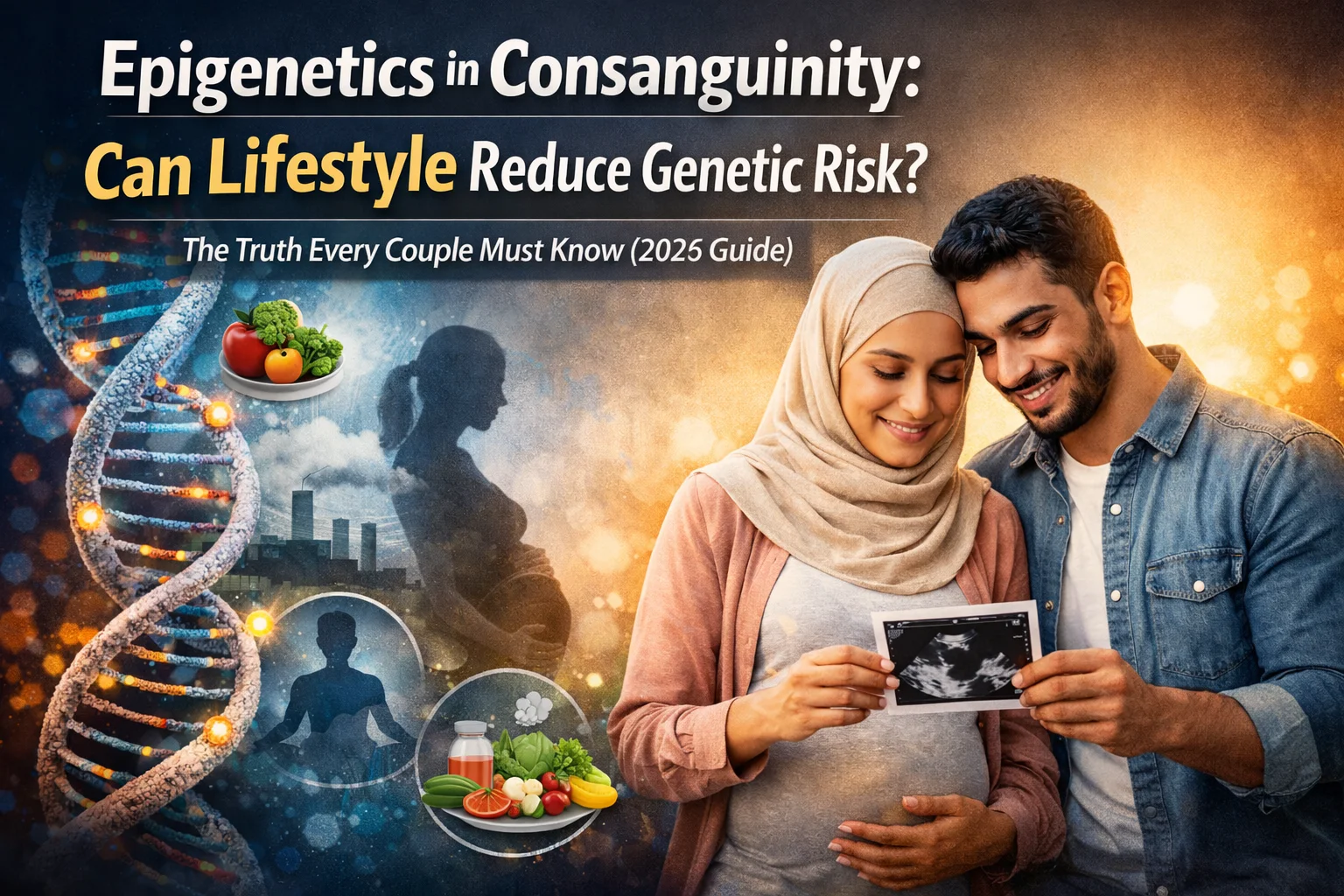
For generations, we have been told a simple, unbreakable truth: your DNA is your destiny. The blueprint you received at conception—your eye color, your height, your risk for heart disease—was largely written in stone before you drew your first breath. But what if everything you learned about heredity was only half the story? What if the food your grandfather ate, the stress your grandmother endured, or the toxins your parents were exposed to left invisible chemical marks on their genes—marks that were silently passed down to you? This is the provocative promise of epigenetics, a field that is rewriting the rules of biology. The central question shaking laboratories at Harvard, MIT, and beyond is no longer if our environment changes our genes, but rather: Can epigenetics be inherited across generations? The shocking answer, emerging from studies on famine survivors, traumatized populations, and even the humble roundworm, suggests that the wall between your life and your ancestors’ experiences is far more permeable than we ever imagined. And for you, your health, and your future children, that changes everything.
The story goes that your life is scripted by the DNA sequence you received from your parents. Your eye color, height, and predisposition to certain diseases were largely locked in at conception. The nature versus nurture debate always assumed that while your environment could influence your behavior, it could not rewrite the hard genetic drive you were born with.
But what if that story is incomplete? What if the experiences, diet, and even the traumas of your parents and grandparents are silently shaping your biology today?
Welcome to the provocative world of epigenetics. Specifically, we are tackling the million-dollar question that is reshaping biology: Can epigenetics be inherited?
The answer, according to a flood of new research published in journals like Nature and The EMBO Journal, is a resounding yes—but with caveats. We are witnessing the fall of the “Weismann Barrier” and the rise of a new understanding of evolution, health, and legacy.
What is an Epigenetic Mark?
Before we discuss inheritance, we need to understand the “software” that runs your genetic “hardware.”
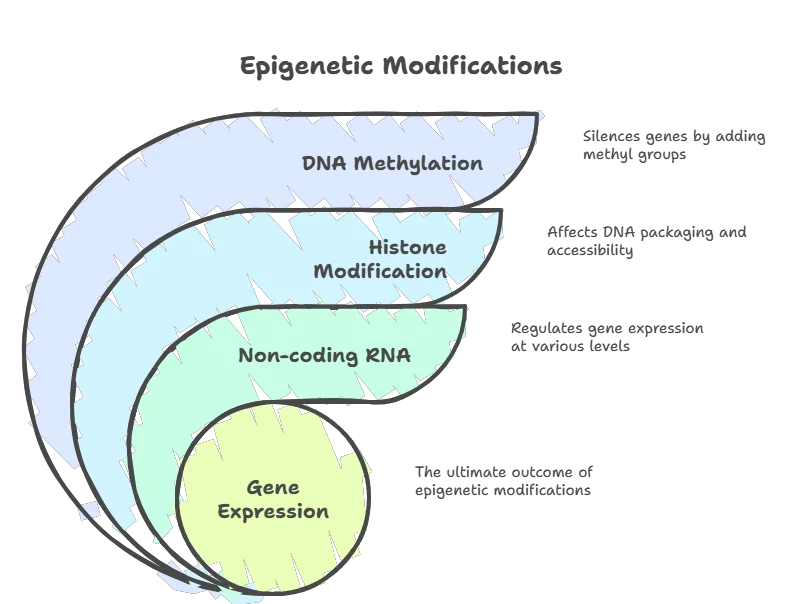
Your DNA is a blueprint. However, a blueprint is useless without instructions on which pages to read and which to ignore. Epigenetics is that instruction manual. It consists of chemical “tags” — primarily DNA methylation and histone modifications — that sit on top of your genes telling them to switch on or off .
Think of your genome as a city. The roads (DNA) are fixed. Epigenetics are the traffic lights. They determine where traffic flows, which neighborhoods grow, and which areas are shut down. Without the traffic lights, the city is chaos.
Traditionally, scientists believed that these traffic lights were reset in every newborn. During conception, a process called “reprogramming” was thought to wipe the epigenetic slate clean, ensuring that a parent’s muscle memory or bad habits didn’t burden the child. However, recent data suggests the eraser is not perfect.
The Mechanisms of Inheritance: How Traits Jump Generations
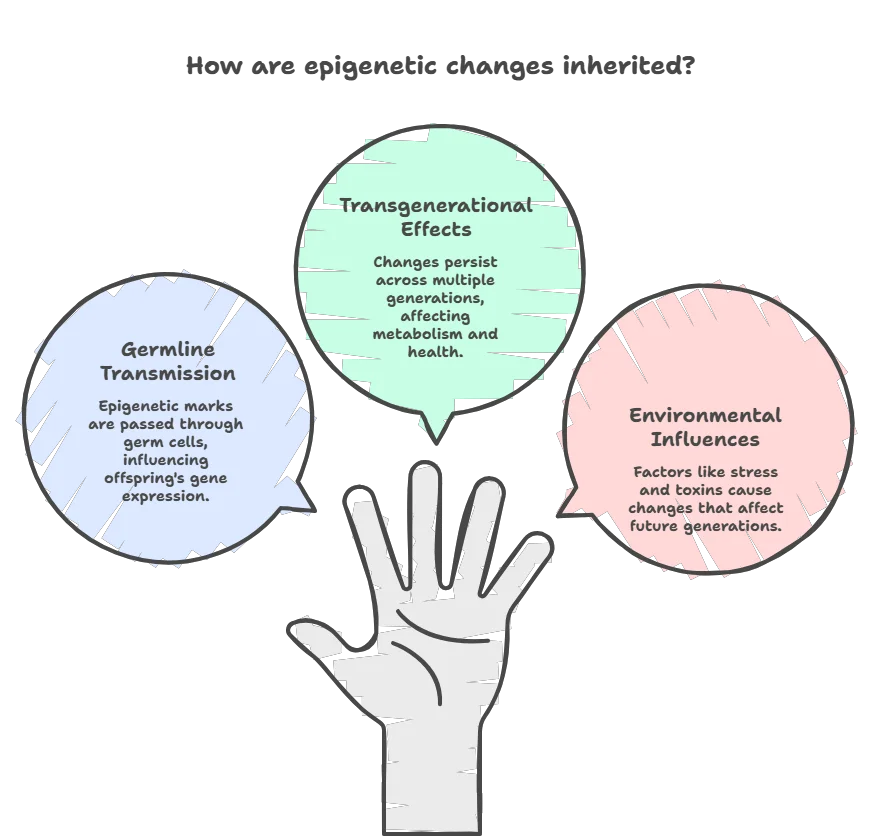
So, can epigenetics be inherited? The scientific term for this is Transgenerational Epigenetic Inheritance (TEI) . To qualify as truly “transgenerational,” the effect must last beyond the first generation of offspring (past the F2 or F3 generation), proving it wasn’t just a direct exposure effect in the womb .
Here is how the science is currently answering that question:
1. The Sperm’s Secret Cargo (Small RNAs)
For a long time, we thought sperm only delivered DNA. We were wrong. A landmark study published in Nature (2024) investigated how fathers pass down metabolic health. Researchers found that mitochondrial RNAs (mt-tRNAs) in sperm carry epigenetic information from the father’s diet directly to the embryo .
In practical terms, if a father eats a high-fat diet before conception, those mt-tRNAs change. These changes correlate with metabolic issues—like glucose intolerance—in the offspring, even if the offspring eats perfectly . This is Lamarckism (the inheritance of acquired traits) making a serious comeback.
2. The Histone Code
In animals like the C. elegans (roundworm), the evidence is even stronger. Scientists have mapped “epimutations”—variations in epigenetic state similar to genetic mutations—and found they can be passed through hundreds of generations . In mammals, it is trickier because of the massive reprogramming waves during development, but studies have shown that histone modifications (the proteins DNA wraps around) can sometimes escape erasure, particularly at sites controlling metabolism and development .
3. The Theory of the Traveling Stem Cell
A fascinating new hypothesis published in Cells & Development (2024) suggests a radical mechanism: pluripotent stem cells may act as “travelers” in the body. They move through the blood, collect epigenetic memories from different organs, and then dedifferentiate into germ cells (sperm/egg), carrying those somatic memories into the next generation . If proven, this would shatter the idea that the germline is isolated from the body.
The Human Impact: From Famine to Trauma
The most famous human examples of epigenetic inheritance come from historical tragedies.
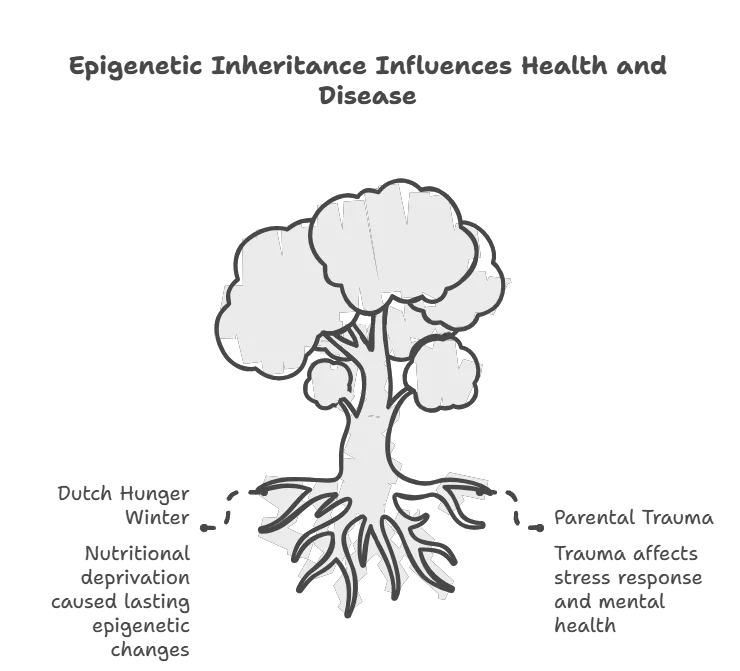
- The Dutch Hunger Winter (1944-1945): Children conceived during a severe famine grew up with higher rates of obesity, heart disease, and altered methylation patterns compared to their siblings born before the famine. Crucially, these health effects were observed in the grandchildren of the women who were pregnant during the famine .
- Stress and Trauma: Research suggests that severe stress or trauma can alter the NR3C1 gene (a stress response regulator). This “stress memory” can be passed down, potentially programming children to have higher baseline cortisol levels or anxiety .
Can We Hack Our Epigenetics?
Here is the hopeful news: unlike the fixed letters of your DNA, epigenetic marks are reversible. They are the body’s response mechanism to the environment. This is where the commercial wellness industry meets hard science.
While we cannot yet buy a pill to “erase” your grandfather’s smoking habit, research suggests we can support healthy methylation and gene expression through lifestyle. If you are concerned about your family history or optimizing your fertility, you might consider supporting your biological systems with evidence-based tools.
Note: As an Amazon Associate, I earn from qualifying purchases.
Support Cellular Methylation
Since DNA methylation is a primary vehicle for epigenetic tags, your body needs “methyl donors” (like folate and B12).
- Amazon Search Link: Methylated B Complex Vitamins: Many people have MTHFR gene variations that make it hard to process synthetic folic acid. Methylated vitamins provide the active form your body uses to build healthy epigenetic tags .
Mitigating Environmental Load
Glyphosate (a common herbicide) and environmental toxins have been shown to disrupt epigenetic regulation . While you cannot avoid the world, you can support detoxification.
- Amazon Search Link: Liver Detox & Glutathione Support: Liposomal Glutathione is the “master antioxidant” that helps the body process environmental chemicals that can otherwise alter DNA methylation patterns.
Deep Dive Reading
If you want to understand the science (and the warning signs) of inherited trauma and toxins, the recently released book “Wired For Struggle” compiles the primary research on how MTHFR, glyphosate exposure, and stress genes (NR3C1/COMT) interact across generations .
The Verdict: Do We Need a New Theory of Evolution?
So, can epigenetics be inherited?
The scientific consensus is shifting from “No” to “Yes, but usually only for one or two generations, and rarely in mammals without a trigger.”
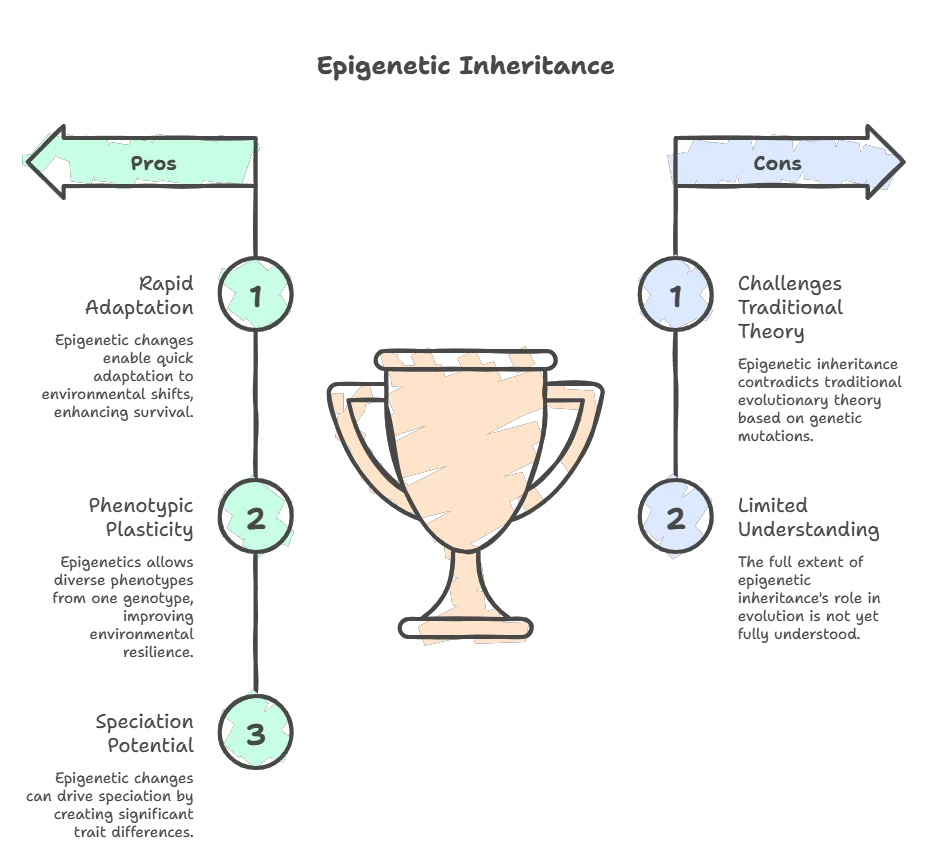
However, the implications are staggering. If a traumatic event changes your parent’s biology, and that changes your biology, then evolution is not just a slow game of random mutation over millions of years. It is also a fast game of adaptation happening right now .
For the average American, this means your morning jog or your late-night fast-food run isn’t just about you. It is a signal. A whisper of information being potentially packaged into small RNAs or stem cells that could influence the health of your future children.
Epigenetics isn’t an excuse for your health issues, nor is it a reason to blame your parents for your anxiety. It is a call to action. It suggests that while we cannot change the past traumas of our lineage, we have the biological freedom to change our environment today—potentially altering the legacy we leave for tomorrow.
Disclaimer: This article is for informational purposes only and does not constitute medical advice. Always consult with a qualified medical professional before starting any new supplement regimen or health plan.
References:
- The EMBO Journal: Epimutations: raw material for evolution? (2026)
- Cells & Development: Epigenetic inheritance of acquired traits via stem cells… (2024)
- Nature: Epigenetic inheritance of diet-induced and sperm-borne mitochondrial RNAs (2024)
- Texas A&M Vital Record: How your parents’ lifestyle choices can impact your health (2025)
- PubMed/NIH: Transgenerational inheritance: how impacts… affect offspring health (2019)