Endurance athletes are always looking for ways to increase performance without causing digestive discomfort during long sessions. One strategy that has gained significant attention is the carbohydrate mouth rinse (CMR)—swishing a carbohydrate solution in the mouth for several seconds and then spitting it out. Despite providing no actual fuel to the body, this simple technique has been shown to improve performance. But how?
This article explains the science, mechanisms, and practical implications behind carbohydrate mouth rinsing.
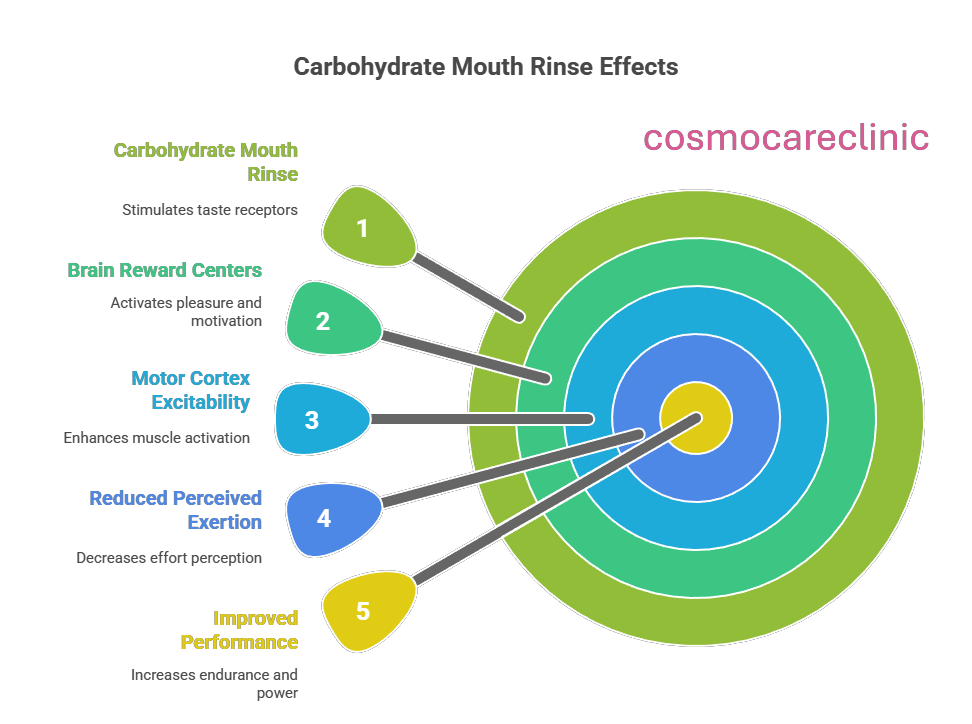
1. What Is a Carbohydrate Mouth Rinse?
A carbohydrate mouth rinse involves swishing a solution containing simple carbohydrates—usually glucose, maltodextrin, or sucrose—in the mouth for about 5–10 seconds before spitting or swallowing.
The key benefit? Even without swallowing, the body responds as if energy is incoming.
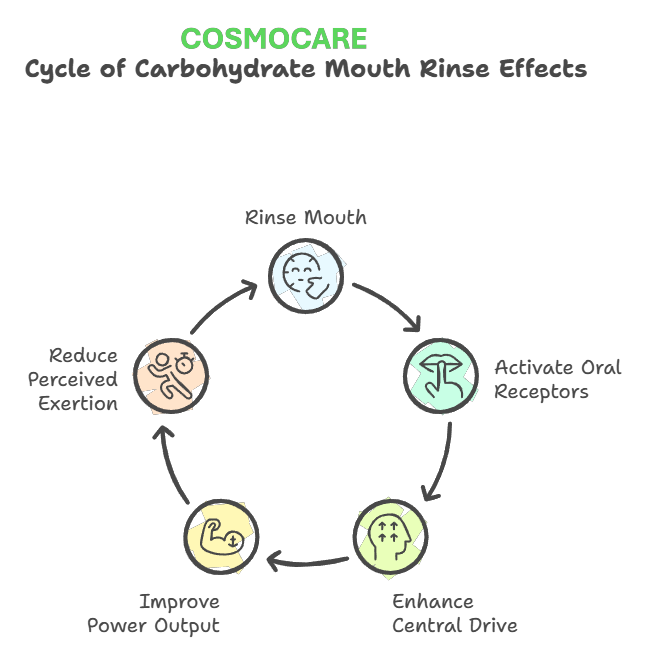
2. Why It Works: The Brain Detects Carbohydrates
Carbohydrate sensors in the mouth
Research shows that the mouth contains receptors that detect the presence of carbohydrates, even if they are not sweet (maltodextrin has no taste). These receptors send signals to the brain that energy is available.
Activation of reward and motor-control areas
Brain-imaging studies demonstrate that carbohydrate in the mouth increases activity in regions related to:
- Motivation and reward (the anterior cingulate cortex)
- Motor control (the striatum)
- Perceived effort regulation
This means the brain essentially becomes more willing to push the body harder.
3. The Main Mechanisms: How CMR Improves Performance
(1) Reduced Perceived Effort
Athletes often report that exercise feels easier after using a carbohydrate mouth rinse.
The brain interprets carbohydrate presence as an incoming energy supply, decreasing the perception of fatigue.
(2) Enhanced Neuromuscular Output
Because the brain’s motor control centers are activated, muscles may receive stronger or more efficient signals, improving power and coordination during high-intensity or endurance efforts.
(3) Psychological Boost
Knowing that carbohydrates are present—even without absorbing them—can subconsciously increase motivation and willingness to maintain or increase effort.
(4) Avoiding Gastrointestinal Distress
During intense exercise, the digestive system slows down. Consuming large amounts of carbs can cause bloating, cramps, or nausea.
A mouth rinse bypasses the gut entirely while still activating brain energy pathways.
4. When Is a Carbohydrate Mouth Rinse Most Effective?
Research suggests CMR is most beneficial when:
✔ Exercise lasts 30–75 minutes
During shorter, high-intensity sessions, the effect is strongest because actual carbohydrate digestion would provide energy too slowly to matter.
✔ Carbohydrate intake is not possible or not tolerated
Common in:
- Fasted training
- Time-trial cycling or running
- High-intensity interval training (HIIT)
- Sports where stomach comfort is critical (e.g., rowing, combat sports)
✔ Athletes want the performance benefit without ingesting calories
Useful for those training fasted or monitoring caloric intake.
5. How to Use a Carbohydrate Mouth Rinse
A typical protocol:
- Use a 6–10% carbohydrate solution (sports drinks or maltodextrin mix).
- Swish the solution in the mouth for 5–10 seconds.
- Spit it out (or swallow if desired).
- Repeat every ~10–15 minutes during exercise lasting over 30 minutes.
6. Carbohydrate Types That Work Best
- Maltodextrin (neutral taste, commonly used in studies)
- Glucose
- Sucrose
- Complex blends in commercial sports drinks
Taste is not necessary for the performance boost—non-sweet carbs work too.
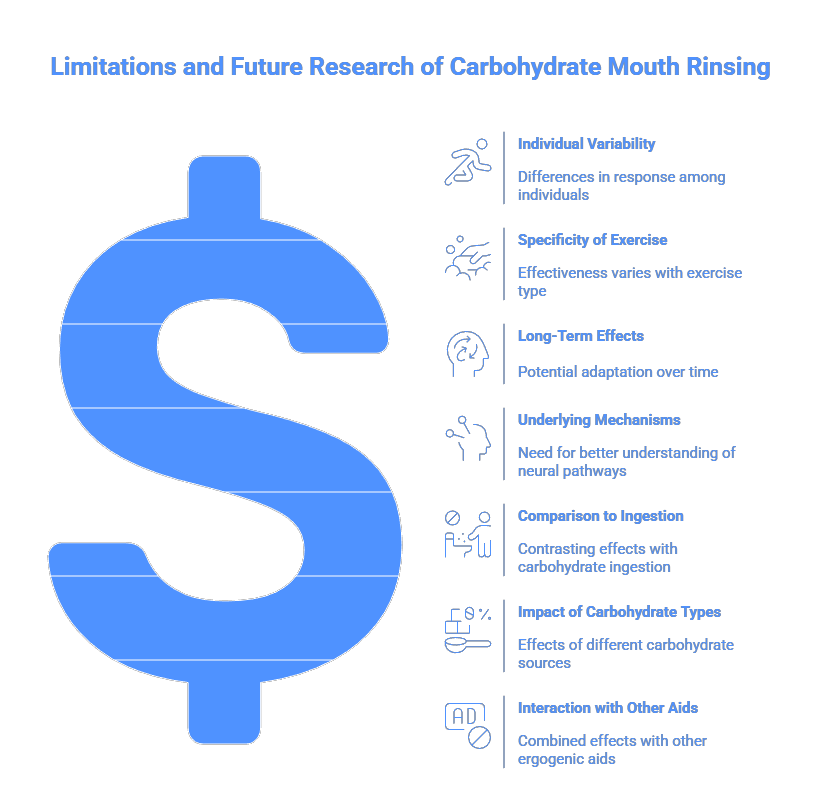
7. Limitations and Considerations
- CMR is less effective for long-duration endurance events (over ~90 minutes) where actual carbohydrate intake is required for fueling.
- Not all athletes respond equally; some experience bigger performance gains than others.
- Consistent practice and timing matter for optimal benefits.
Conclusion
A carbohydrate mouth rinse works by activating receptors in the mouth that signal the brain that energy is on the way, even when no carbohydrate is actually ingested. This boosts motivation, reduces perceived effort, and enhances neuromuscular control. As a result, athletes—especially those engaging in high-intensity or moderate-duration exercise—can experience meaningful performance improvements without consuming any calories or stressing the gut.
Carbohydrate mouth rinsing represents a fascinating example of how the brain, not just the muscles, plays a central role in endurance performance.
Leave a Reply