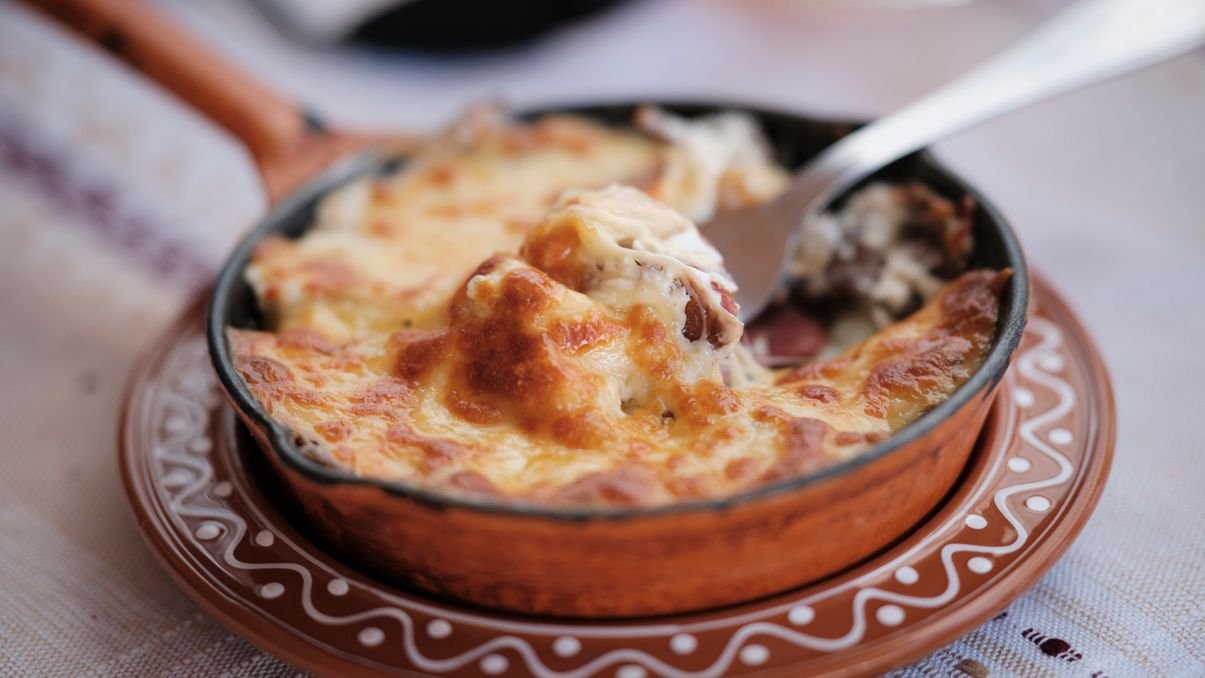
A practical buying guide to the bakeware that matters most on Thanksgiving — what to look for, what to skip, and which dishes fit your budget and menu.
Last updated: November 24, 2026
Quick Verdict
Thanksgiving baking dishes are not a single product but a category: the casserole dishes, pie plates, sheet pans, and roasting pans that carry the meal. The right choice depends on what you actually cook — a deep casserole for stuffing or green bean bake, a wide shallow dish for cobblers and gratins, a glass pie plate for pumpkin pie, and a sturdy sheet pan for sides and rolls.
What matters most before you buy
- Material — ceramic and glass hold heat well and go from oven to table; metal heats faster and is better for browning; cast iron is heavy but durable.
- Size and shape — depth matters for casseroles, width matters for desserts and gratins, and handles matter when you’re pulling a hot dish out of a crowded oven.
- Oven-safe temperature and broiler safety — check the manufacturer’s stated limits, not assumptions.
- Cleaning and care — dishwasher-safe claims should be verified per product, not generalized.
- Budget — a basic glass or ceramic dish can cost a fraction of a brand-name enameled piece, and both can produce excellent results.
No single dish is “best” for everyone. The recommendations below are organized by budget and use case so you can match a dish to your menu rather than to a marketing claim.
Verification note: Prices, availability, and specific product specifications change frequently. This article does not claim to have tested these products. Confirm current price, material, dimensions, oven-safety rating, and care instructions on the official product page before buying.
Affiliate Disclosure
This article contains affiliate links. If you purchase through these links, this website may earn a commission at no additional cost to you. Recommendations are based on category suitability, stated product information, and buying criteria — not on commission rates. We do not claim to have personally tested products unless explicitly stated.
Introduction
Thanksgiving cooking puts unusual demands on bakeware. You’re likely running a crowded oven, moving dishes between courses, and serving food that needs to look presentable at the table. A dish that works beautifully for a weeknight dinner can fail under Thanksgiving conditions — too shallow for a casserole, too small for a crowd, or not safe at the temperatures a recipe requires.
This guide focuses on the baking dishes that do the most work on Thanksgiving: casserole and baking dishes for sides and desserts, pie plates, and the pans that handle rolls, roasted vegetables, and sheet-pan desserts. It explains what to check before buying, compares budget tiers, and links to current product listings where available.
It does not provide medical or nutritional advice. For dietary questions related to Thanksgiving recipes, consult a qualified professional.
What Thanksgiving Baking Dishes Actually Need to Do
Thanksgiving bakeware has to handle four jobs:
- Casseroles and savory sides — stuffing, green bean casserole, sweet potato casserole, mac and cheese. These need depth, even heat, and often a lid or covered bake stage.
- Desserts — pies, cobblers, crisps, bars, and sheet cakes. These need the right pan dimensions for the recipe to set correctly.
- Roasting and sheet-pan sides — roasted vegetables, rolls, and sheet-pan desserts. These need rimmed pans with enough surface area for browning.
- Table presentation — many Thanksgiving dishes go straight from oven to table, so appearance and handle design matter more than on a normal weeknight.
A dish that is excellent for one job may be poor for another. Buying one “do-everything” pan usually means compromising on at least one of these uses.
Key Buying Criteria
Use these criteria to compare any Thanksgiving baking dish:
| Criterion | What to Check | Why It Matters |
|---|---|---|
| Material | Ceramic, glass, aluminized steel, carbon steel, cast iron | Affects heat distribution, browning, weight, and care |
| Dimensions | Interior length × width × depth | Determines whether your recipe fits and cooks evenly |
| Capacity | Quarts or liters, if stated | Critical for casseroles and crowd-sized recipes |
| Oven-safe max temperature | Manufacturer’s stated limit | Prevents cracking, warping, or unsafe use |
| Broiler safety | Explicitly stated or not | Many ceramic and glass dishes are not broiler-safe |
| Handles | Size, shape, material | Affects safe transfer of hot, heavy dishes |
| Lid | Included or not | Matters for covered bakes and transport |
| Care | Dishwasher-safe, hand-wash, seasoning required | Affects long-term usability |
| Thermal shock risk | Stated warnings | Relevant for glass and some ceramic |
| Warranty | Stated or not disclosed | Indicates manufacturer confidence |
| Price | Verified current price | Should be checked at time of purchase |
| Cost per use | Price ÷ realistic uses per year | Better value metric than sticker price alone |
Important: Do not assume a dish is broiler-safe, dishwasher-safe, or freezer-to-oven safe unless the manufacturer states it. Thermal shock can crack glass and ceramic.
Featured Picks: Two Dishes Worth Considering First
The two options below are highlighted because they cover the most common Thanksgiving use cases: a multi-size set for cooking several dishes at once, and a deep lidded dish for covered bakes and transport. Verify the current brand, material, dimensions, price, and care instructions on each product page before buying.
Pick 1: Stoneware Baking Dish Set (Oven-to-Table)
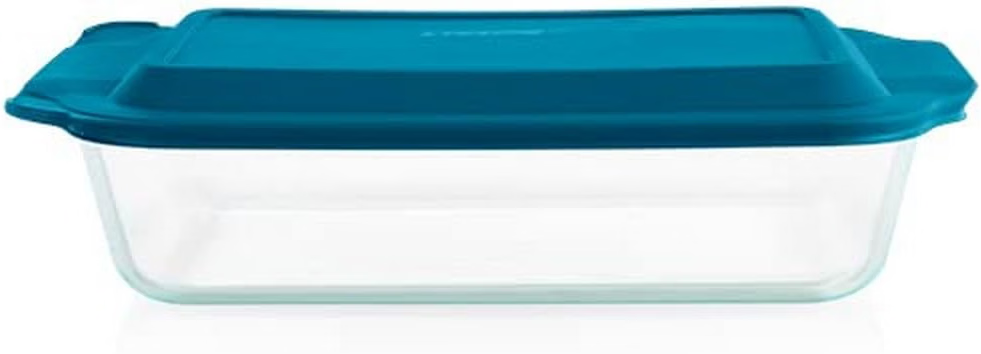
Best for: Households that want one set to cover casseroles, sides, and desserts, with dishes attractive enough to go straight from oven to table.
Why it’s worth considering: A multi-size stoneware set typically includes a large dish for stuffing or sweet potato casserole, a medium dish for mac and cheese or green bean casserole, and a small dish for brownies or single-batch desserts. Stoneware heats evenly, holds heat well at the table, and a glazed finish usually looks presentable for serving. Many comparable stoneware sets are stated as oven-safe to around 500°F and microwave- and dishwasher-safe — but confirm each claim on the actual product page.
What to verify: The specific brand, quart capacity of each piece, exact interior dimensions, oven-safe maximum temperature, broiler safety, and dishwasher claims. A set’s advantage is coverage; its drawback is storage space. If your kitchen is tight, a single deep 9×13-inch dish may be more practical.
Pick 2: Deep Baking Dish with Lid (Covered Bake & Transport)
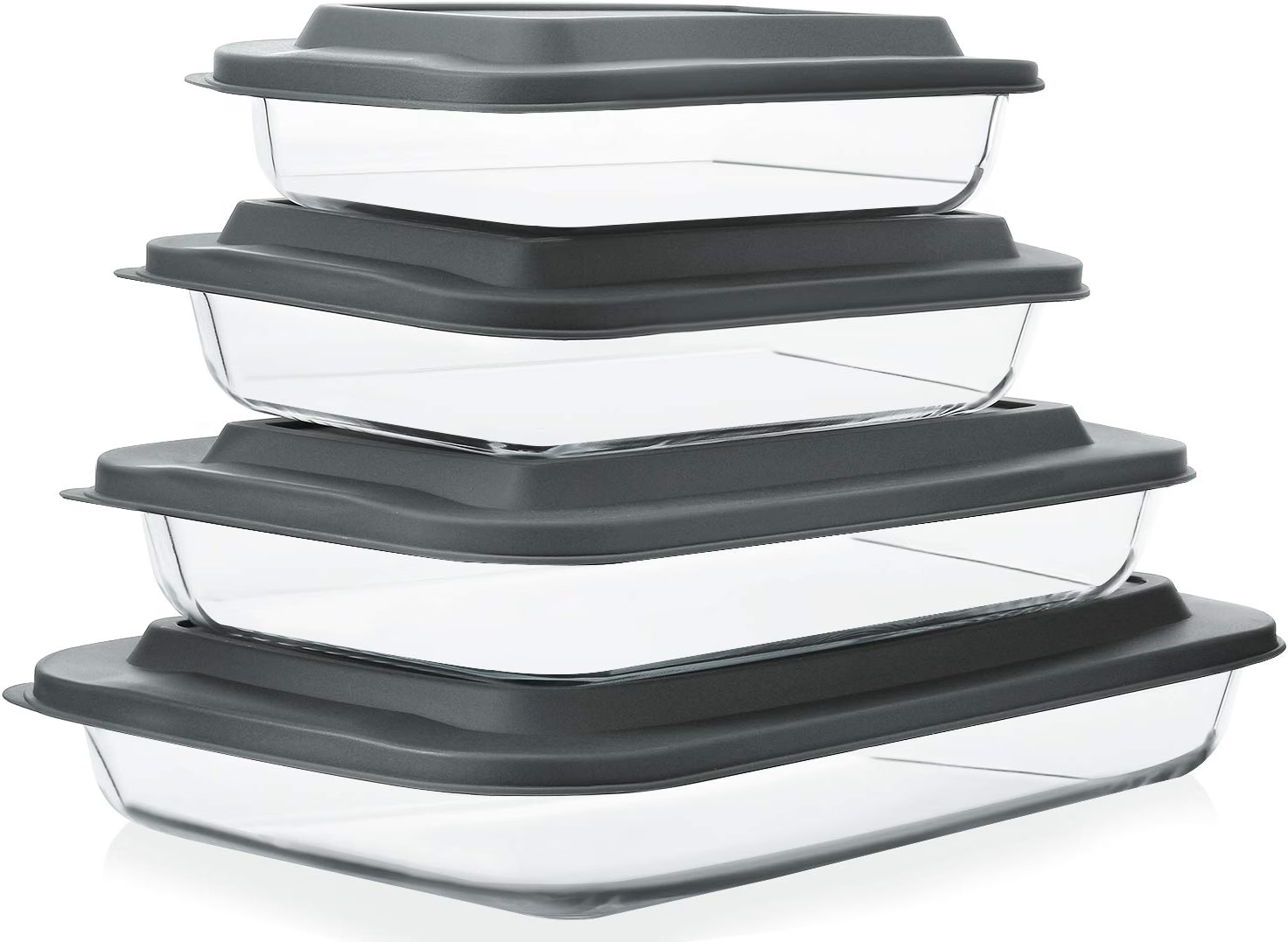
Best for: Cooks who need to bake covered, carry a dish to someone else’s house, or store leftovers in the same vessel.
Why it’s worth considering: A lidded baking dish is underrated at Thanksgiving. The lid lets you assemble a casserole ahead, transport it without foil, and refrigerate leftovers without transferring containers. A deeper side wall — often around 3 inches versus the standard 2.5 — gives more headroom for loaded casseroles and layered desserts, reducing the chance of overflow during baking or carrying.
What to verify: Whether the dish is glass or stoneware, whether the lid is included, and — critically — whether the lid is oven-safe. Most included lids are for storage and transport only and must be removed during baking. Confirm the stated oven-safe temperature and thermal-shock warnings, especially for glass.
Budget Tiers Compared
The table below compares budget tiers by typical characteristics. It does not list specific prices because current pricing must be verified per product and per retailer.
| Tier | Typical Materials | Typical Strengths | Typical Limitations | Best For |
|---|---|---|---|---|
| Budget | Basic glass, stamped metal, inexpensive ceramic | Low upfront cost, widely available | Fewer size options, less even heat, shorter lifespan | First Thanksgiving, occasional cooks, backup dishes |
| Mid-range | Better ceramic, aluminized steel, stoneware | More even heating, better handles, more sizes | Still limited broiler or dishwasher claims | Most households cooking a full Thanksgiving |
| Premium | Enameled cast iron, high-end stoneware, heavy-gauge metal | Durability, heat retention, table presentation | Weight, cost, care requirements | Frequent hosts, large gatherings, long-term investment |
Value note: A mid-range dish that fits your actual recipes is usually better value than a premium dish you rarely use. Calculate cost per use only when you have verified the price and have a realistic estimate of how often you’ll use it.
Best for Casseroles and Savory Sides
Casseroles are the backbone of Thanksgiving sides. The key requirements are depth, capacity, and even heat.
What to look for
- Depth of roughly 2.5–3 inches for layered casseroles and stuffing.
- Capacity matched to your recipe — a 9×13-inch dish is common for crowd-sized sides; a 2-quart dish suits smaller households.
- Handles large enough for a secure grip with oven mitts.
- A lid or cover option if you plan to bake covered, transport the dish, or refrigerate leftovers in the same vessel.
- Even heat distribution — ceramic and glass are common choices; metal heats faster but can brown more aggressively on the bottom.
How the tiers compare for casseroles
- Budget: A basic glass or ceramic 9×13-inch dish covers most casserole needs at low cost. Verify oven-safe limits and avoid sudden temperature changes.
- Mid-range: Stoneware or heavier ceramic with wide handles improves safe transfer and table presentation. Confirm dishwasher and broiler claims per product.
- Premium: Enameled cast iron offers excellent heat retention and can go from oven to table, but it is heavy and requires care. It is a long-term purchase, not a budget solution.
Related reading: See the featured stoneware set and lidded deep dish above.
Best for Desserts and Pies
Dessert bakeware has different requirements from casserole dishes.
Pies and tarts
- Glass pie plates let you see browning on the bottom crust and are inexpensive.
- Metal pie plates conduct heat quickly and produce crisp crusts but can be less attractive at the table.
- Ceramic pie dishes look good on the table but may heat more slowly; check the manufacturer’s oven-safe rating.
- Depth and diameter must match your recipe. A deep-dish pie plate holds more filling than a standard plate.
Cobblers, crisps, and gratins
- A wide, shallow ceramic or glass dish gives more surface area for topping and browning.
- A 9×9-inch or 8×8-inch square dish suits smaller batches; a 9×13-inch dish suits crowd-sized desserts.
Bars and sheet cakes
- A rimmed metal sheet pan is more versatile than a dedicated brownie pan and can handle sheet-pan desserts, roasted vegetables, and rolls.
- Check gauge and warp resistance if you plan to use high heat.
Ready to compare options? Review dimensions, material, and serving sizes on the official product page before purchasing.
Compare the stoneware set → | Compare the deep lidded dish →
Best for Roasting and Sheet-Pan Sides
Thanksgiving sides often need a sheet pan: roasted Brussels sprouts, sweet potatoes, rolls, and sheet-pan desserts.
What to look for
- Rimmed edges to contain juices and prevent spills.
- Heavy-gauge metal for even browning and less warping.
- Correct size for your oven — a half-sheet pan (about 18×13 inches) is the workhorse size for most home ovens; verify interior oven dimensions.
- Nonstick vs. uncoated — nonstick is easier to clean but can limit high-heat browning and broiler use; check the manufacturer’s stated maximum temperature.
How the tiers compare for sheet pans
- Budget: A basic rimmed sheet pan is inexpensive and covers many tasks. Check for warping at high heat.
- Mid-range: Aluminized steel or heavy-gauge pans resist warping better and brown more evenly.
- Premium: Heavy-duty sheet pans and roasting pans with racks are useful for large turkeys and big batches but cost more and take up storage space.
Material Comparison: Ceramic, Glass, Metal, Cast Iron
| Material | Heat Distribution | Browning | Weight | Care | Best Use | Key Caution |
|---|---|---|---|---|---|---|
| Glass | Even, slower to heat | Moderate | Moderate | Usually easy to clean; check dishwasher claim | Casseroles, pies, gratins | Thermal shock risk; not always broiler-safe |
| Ceramic/stoneware | Even, retains heat | Moderate to good | Moderate to heavy | Often dishwasher-safe; verify | Casseroles, table presentation | Check oven-safe and broiler limits |
| Aluminized steel | Fast, even | Good | Light to moderate | Hand-wash often recommended | Sheet pans, roasting | Check coating and max temperature |
| Carbon steel | Fast, excellent browning | Excellent | Moderate | Seasoning may be required | Sheet pans, roasting | Requires care to prevent rust |
| Cast iron | Slow to heat, excellent retention | Excellent | Heavy | Seasoning required | Roasting, cornbread, some desserts | Heavy; not for everyone |
| Enameled cast iron | Excellent retention | Good | Heavy | Hand-wash often recommended | Oven-to-table casseroles | Chipping risk; cost |
Do not assume that a material is universally better. The right material depends on the recipe, the oven, and how you plan to serve.
Cost and Value: What You’re Paying For
Thanksgiving bakeware prices vary widely by material, brand, size, and retailer. Rather than list unverified prices, use this framework:
- Verify the current price on the official product page or a retailer you trust.
- Calculate cost per use only if you have a realistic estimate of uses per year: price ÷ estimated uses.
- Include hidden costs — shipping, tax, lids sold separately, racks sold separately, and replacement costs if a dish cracks.
- Compare like with like — a 9×13-inch glass dish and a 9×13-inch enameled cast iron dish are not the same product category.
- Check warranty and return policy before buying.
Budget reality: A low-cost glass or basic metal dish can produce excellent Thanksgiving food. Premium materials offer durability, heat retention, and presentation, not guaranteed better taste.
Compare pricing and value side by side. Check the current price, included accessories, and care instructions for each option.
Safety and Care Considerations
- Thermal shock: Avoid moving hot glass or ceramic dishes directly onto cold surfaces or into water. Follow the manufacturer’s warnings.
- Broiler use: Many ceramic and glass dishes are not broiler-safe. Check the stated maximum temperature and broiler instructions.
- Oven-safe limits: Do not exceed the manufacturer’s stated maximum temperature.
- Handles and weight: A heavy dish filled with hot food is a burn and drop risk. Use appropriate mitts and clear a landing space before moving dishes.
- Dishwasher claims: Verify per product. Hand-washing prolongs the life of many ceramic and nonstick items.
- Cast iron and carbon steel: Follow seasoning and drying instructions to prevent rust.
- Food safety: Cook stuffing and casseroles to safe internal temperatures according to reputable food-safety guidance. Bakeware choice does not replace safe cooking practices.
For food-safety guidance, consult authoritative sources such as the USDA Food Safety and Inspection Service.
Common Buying Mistakes
- Buying for looks over dimensions — a beautiful dish that doesn’t fit your recipe wastes money.
- Assuming broiler safety — verify before using high heat.
- Ignoring depth — shallow dishes overflow; deep dishes may not set desserts correctly.
- Buying one “do-everything” pan — usually compromises on at least one use.
- Skipping handle checks — hot, heavy dishes need secure grips.
- Overlooking storage — large roasting pans and cast iron take up space.
- Trusting unverified reviews — distinguish verified purchase reviews from promotional content.
FAQ
1. What size baking dish is best for Thanksgiving casseroles?
A 9×13-inch dish is the most common size for crowd-sized sides. Smaller households may prefer 8×8-inch or 2-quart dishes. Verify the capacity and depth stated by the manufacturer and match it to your recipe.
2. Is glass or ceramic better for Thanksgiving baking?
Both are suitable. Glass lets you see browning and is often less expensive; ceramic retains heat and often looks better on the table. Check oven-safe and broiler limits for the specific product.
3. Can I put a glass baking dish under the broiler?
Not unless the manufacturer explicitly states it is broiler-safe. Many glass dishes are not broiler-safe, and thermal shock can cause cracking.
4. Do I need a separate pie plate and casserole dish?
Usually yes. Pie plates are shallow and sized for pie recipes; casserole dishes are deeper and larger. Some dishes overlap in function, but dedicated pie plates produce better crust results for most recipes.
5. What is the best budget Thanksgiving baking dish?
A basic glass or ceramic 9×13-inch dish and a rimmed metal sheet pan cover most needs at low cost. Verify dimensions, oven-safety, and care instructions before buying.
6. How do I calculate cost per use for a baking dish?
Divide the verified purchase price by the number of times you realistically expect to use it per year. Include accessories like lids or racks if sold separately.
7. Are expensive baking dishes worth it?
Premium materials can offer durability, heat retention, and presentation, but they do not guarantee better food. Match the purchase to how often you cook and what you actually need.
8. What should I check before buying a baking dish online?
Check material, interior dimensions, capacity, oven-safe maximum temperature, broiler safety, dishwasher claims, handle design, warranty, and current price. Do not rely on unverified review counts or promotional claims.
Final Verdict and Next Steps
There is no single best Thanksgiving baking dish for every household. The practical approach is to match dishes to your menu:
- For casseroles and savory sides: prioritize depth, capacity, handles, and even heat. A mid-range ceramic or stoneware dish is a reasonable default for most households; a basic glass dish is a sensible budget alternative.
- For desserts and pies: prioritize correct pan dimensions and material suited to your recipe. A glass pie plate and a rimmed sheet pan cover most dessert needs.
- For roasting and sheet-pan sides: prioritize heavy-gauge rimmed metal pans sized to your oven.
- For long-term hosts: premium enameled cast iron or heavy stoneware can be worth the investment, provided you accept the weight and care requirements.
Before you buy, verify: current price, material, interior dimensions, capacity, oven-safe and broiler limits, dishwasher claims, warranty, and return policy on the official product page.
Next step: Compare the two featured options and confirm specifications before purchase.
Suggested Internal Links and Anchor Text
Only use destinations that are known and verified on the target website. Suggested anchor text:
- “Thanksgiving side dish recipes” → relevant recipe category page
- “How to plan a Thanksgiving menu” → relevant planning article
- “Food safety tips for Thanksgiving” → relevant food-safety article
- “Best pie recipes for Thanksgiving” → relevant dessert article
Do not invent URLs. If a destination is not verified, omit the link.
Featured Image Concept and Alt Text
Concept: An overhead shot of a Thanksgiving table with a ceramic casserole dish, a glass pie plate, and a rimmed sheet pan arranged alongside seasonal ingredients.
Alt text: “Thanksgiving baking dishes including a ceramic casserole, glass pie plate, and rimmed sheet pan on a holiday table.”
References
Cite material factual and safety claims with authoritative sources. Suggested source types:
- USDA Food Safety and Inspection Service — food safety and safe cooking temperatures. fsis.usda.gov
- FDA — food safety and consumer guidance. fda.gov/food
- Manufacturer product pages — dimensions, materials, oven-safe limits, care instructions, and warranty.
- Consumer product safety guidance — thermal shock and glass/ceramic care warnings where applicable.
Do not fabricate citations. Verify each source before publication and include publication or update dates where appropriate.